

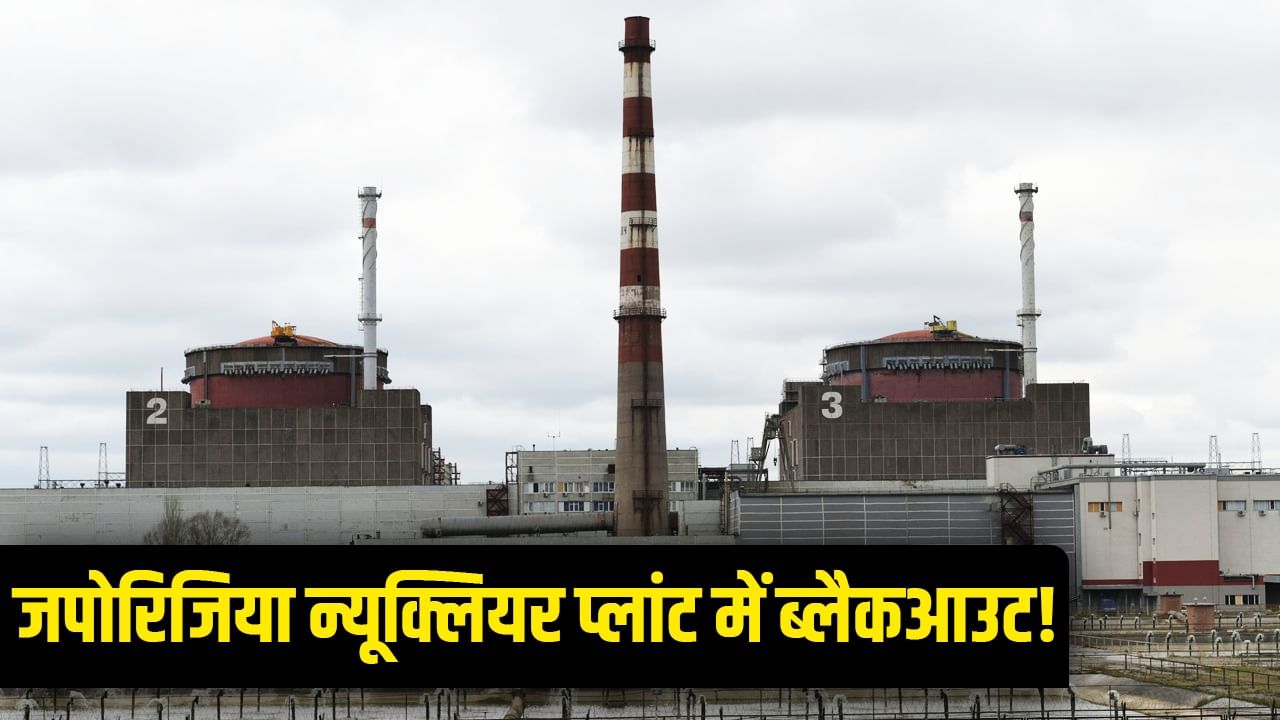
Amidst the ongoing war between Ukraine and Russia, Europe’s largest nuclear facility, the Zaporizhzhia Nuclear Plant, is again drawing attention. The plant has been without external electricity for three days, an unprecedented period, heightening concerns about safety.
The nuclear plant requires continuous cooling to prevent the nuclear fuel from overheating and melting. This cooling relies on a constant supply of external power. When external power is lost, backup diesel generators are activated. The plant is currently relying solely on generators to maintain cooling. If the diesel fuel runs out and no new supply is received, the reactors could escalate to a hazardous state within weeks.
Why the Power Outage?
The final high-voltage power line from the plant was damaged on Tuesday by Russia. Russia claims that repairs are difficult due to Ukrainian military activity. Ukraine, however, maintains that it does not attack the plant due to the extreme risks.
IAEA Director General Sounds the Alarm
Rafael Grossi, head of the International Atomic Energy Agency (IAEA), stated that the situation is deeply concerning. He met with Russian President Putin, but no concrete solutions were produced. Greenpeace and Ukrainian officials have continuously warned that nuclear safety is at risk.
What are Russia’s Intentions?
Ukraine and international experts believe Russia is deliberately engineering a crisis. They aim to demonstrate to the world, especially Ukraine, that the safety and operation of the plant are under Russia’s exclusive control.
* Russia is preparing to connect the plant to its power grid.
* It is believed that Russia may soon attempt to restart a reactor to demonstrate its capacity to run the plant independently.
* Greenpeace experts have observed, via satellite imagery, a 125-mile power line built by Russia from Mariupol, potentially intended to connect to the plant.
How Great is the Risk?
Following the Fukushima disaster in Japan in 2011, European regulators conducted a study to determine how long a plant could function without external power. The conclusion was that the plant could operate for up to 72 hours. The Zaporizhzhia plant has now surpassed this limit. Although the reactors are presently cooled, the immediate danger is not as acute as in Fukushima. However, the long-term risks remain significant.