

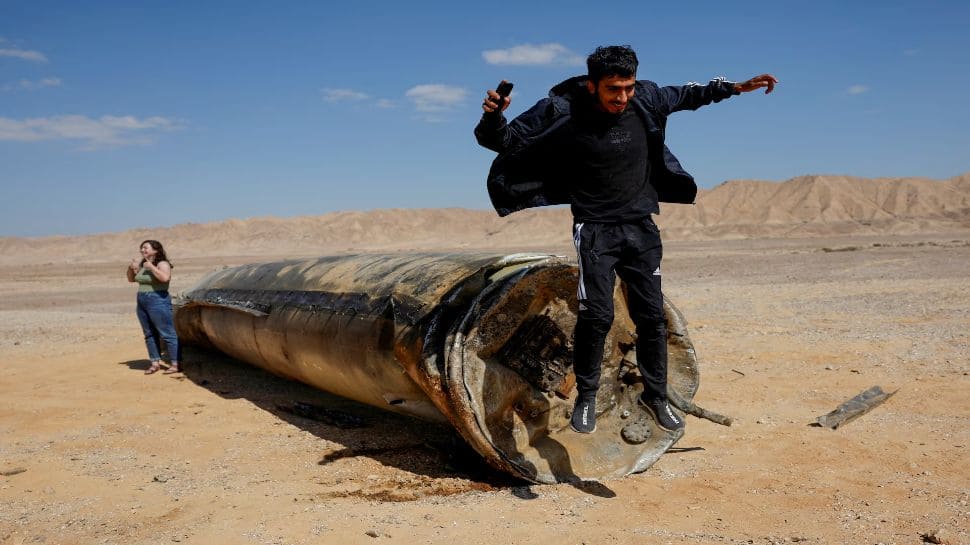
The night of April 13, 2024, witnessed a pivotal confrontation as American pilots played a crucial role in defending Israel against a significant Iranian drone and missile assault. This event was a direct response to an earlier Israeli strike on the Iranian embassy in Damascus that resulted in the deaths of senior Revolutionary Guard officers, an act Iran vowed to retaliate against.
Iran’s ‘Operation True Promise’ saw a massive launch of drones and missiles. While Iran aimed to demonstrate its military prowess, the operation achieved limited success due to effective counter-measures. U.S. Central Command confirmed the destruction of over 80 Iranian drones and six ballistic missiles, a testament to the vital contribution of American airpower in neutralizing the threat.
The U.S. Air Force has released a documentary, ‘Dangerous Game,’ offering a compelling first-hand account from F-15E Strike Eagle pilots involved in the defense. The film delves into the complex tactical, psychological, and operational challenges they confronted throughout the night.
This escalation occurred against a backdrop of heightened regional tensions, stemming from the October 7th attacks and subsequent conflicts involving regional proxies. The April 1st strike in Damascus, which eliminated key IRGC figures like Mohammad Reza Zahedi, served as a direct trigger for Iran’s retaliatory actions. Adding to the pressure on U.S. forces was the January drone attack on ‘Tower 22’ in Jordan, which killed three American service members. This tragic event deeply impacted the pilots, as Major Benjamin of the 494th Fighter Squadron stated, “After the Tower 22 attack, everything became personal. The deaths of American soldiers were a huge shock. We knew we would be called to protect our comrades soon.”
Iran’s use of the Shahid-136 drone presented a new challenge. These drones are inexpensive, produced in large numbers, and designed to evade radar detection, flying at low altitudes to make them harder to intercept. Pilots developed innovative tactics, including using ground-based targeting pods for early detection and maintaining strict radio silence, relying on concise alerts such as “Drone there.”
‘Dangerous Game’ captures the dramatic shift from a quiet night to an intense combat scenario. Pilots were put on emergency standby and deployed rapidly. As F-15s took to the skies, radar screens were flooded with incoming Iranian drones. The activation of defensive radar engagement, signaled by ‘Focus Three,’ marked the commencement of active firing. Pilots recounted experiences like firing AIM-120 AMRAAM missiles in combat for the first time and flying at exceptionally low altitudes to engage targets. Early successes in destroying drones were sometimes followed by their continued flight.
The threat evolved as Iranian ballistic missiles appeared, creating a dynamic and dangerous aerial battle. Pilots found it challenging to track the numerous incoming missiles, with some being intercepted mid-flight while others impacted their targets. A base-wide red alert was issued, demanding immediate security measures and aircraft preparation. The pace of operations was extraordinarily rapid, with crews completing refueling, rearming, and critical aircraft checks in remarkably short times. The return flight under threat and with critically low fuel levels added a final layer of peril to this significant defensive operation.