

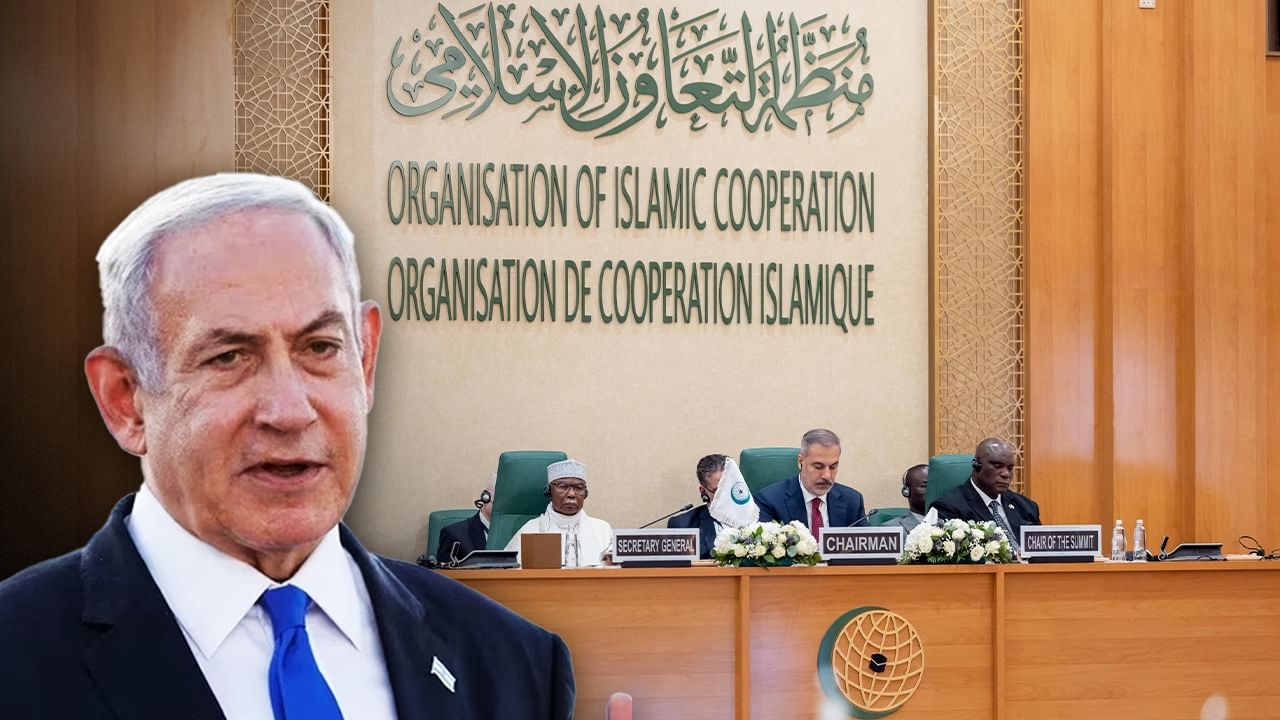
The recent Arab-Islamic summit in Doha, Qatar, which saw participation from the Arab League and the Organization of Islamic Cooperation (OIC), representing 57 Muslim countries, showcased ongoing tensions involving Israel. The summit was called after Israeli airstrikes on Hamas leaders. Despite several OIC gatherings, little action has been taken, leading to the question of why Israel does not seem to fear these nations. The answer lies in Israel’s strategic agreements with various Muslim countries.
Azerbaijan supplies 60% of Israel’s oil needs. A gas exploration agreement was signed in March 2025. During the recent conflict, Azerbaijan assisted Israel with its energy needs. The Abraham Accords, signed in September 2020, resulted in the UAE becoming the first Arab nation to recognize Israel, followed by Bahrain, Morocco, and Sudan. In 2024, bilateral trade increased, and Israel sources 10% of its petroleum products from the UAE. Cooperation has developed in various areas. However, actions in the West Bank following the Gaza war could jeopardize the Abraham Accords, according to the UAE.
A natural gas agreement between Egypt and Israel is vital for their energy security. Gas from Israeli fields is transported through Egyptian LNG terminals to Europe. The 2018 Dolphin agreement allows Israel to receive natural gas from Egypt, earning billions of dollars annually. Both nations aim to establish an energy hub through gas pipeline infrastructure.
Saudi Arabia deals with the Houthi rebels, who have been active since 2014. Saudi Arabia views Israel as a way to limit Iranian influence. If Israel is weakened, Iran and the Houthis could become stronger. Israel’s presence helps to reduce Iranian expansionism. Houthi attacks have affected the global oil market, and Israel conducts attacks against Houthi rebels in Yemen. A weaker Israel could make Saudi Arabia’s challenges worse.
Turkey stopped trade with Israel due to the Gaza war, but its embassy remains active, and trade continues via third parties. This trade reached $1.2 billion in 2024. Turkey has defense ties with Israel and also a Jewish population. While supporting Palestine publicly, Turkey maintains relations with Israel for commercial purposes.
The US has a complex role in the normalization of relations between Pakistan and Israel. The US wants more Muslim countries to recognize Israel, but the majority of Pakistanis support Palestine. Pakistan faces a difficult position. The US exerts pressure regarding IMF loans, aid, and the China-Pakistan Economic Corridor (CPEC). Domestic opposition could arise if Israel is recognized, so Pakistan has not made any decision on the matter.