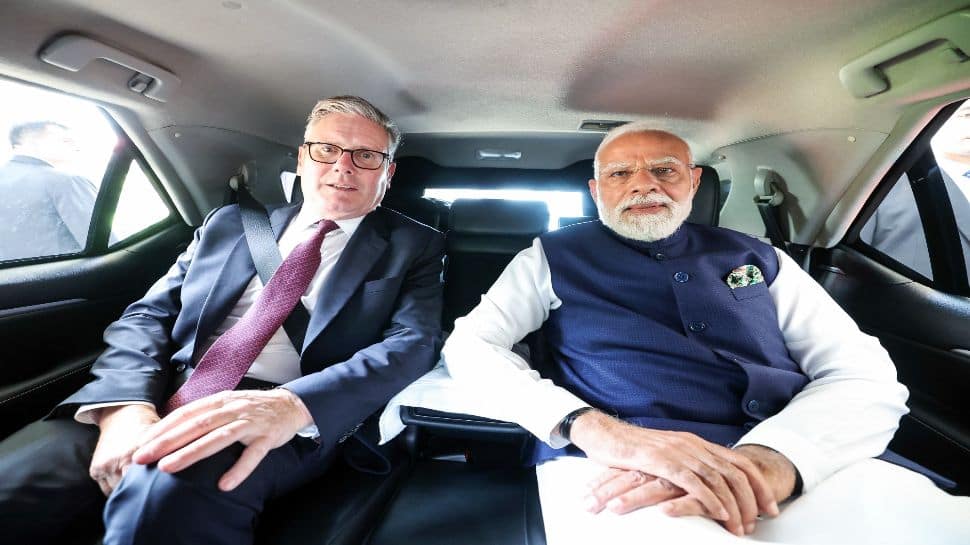

A significant development in UK-India relations occurred with Prime Minister Keir Starmer expressing strong backing for India’s bid for permanent membership in the United Nations Security Council (UNSC). During his meeting with Prime Minister Narendra Modi in Mumbai, Starmer emphasized the UK’s support for India’s rightful place in the UNSC. This diplomatic milestone was further solidified in a joint statement that highlighted the leaders’ shared commitment to global peace, prosperity, and a rules-based international order, including a pledge to work towards reforming the UNSC. The UK’s enduring support for India’s legitimate aspirations for permanent membership in a reformed UNSC was unequivocally reiterated. Foreign Secretary Vikram Misri confirmed this continued backing, noting its importance for India’s objective. The visit also placed substantial emphasis on economic ties, with trade and investment dominating discussions. Both leaders acknowledged the high level of anticipation from the business communities in both nations regarding the Free Trade Agreement (FTA) signed in July, currently undergoing ratification. They foresaw significant growth in future investment and trade cooperation. The visit served to deepen strategic economic engagement, enabling both sides to maximize the benefits of the FTA’s tariff reductions. The first meeting of the revitalized India-UK CEOs Forum took place, focusing on long-term trade and investment and supporting the FTA’s implementation. Innovative joint initiatives were announced, such as enhancing the Climate Technology Startup Fund to nurture entrepreneurs in climate technology and Artificial Intelligence, complementing the FTA’s focus on innovation and the Technology Security Initiative. Technology and innovation were identified as a key pillar of the bilateral partnership, evidenced by new agreements on connectivity, artificial intelligence, and critical minerals to ensure resilient supply chains and promote green technologies. Further collaborative efforts include launching phase two of the UK-India Critical Minerals Supply Chain Observatory and establishing a new satellite campus at IIT, the Indian School of Mines, Dhanbad. In terms of defense, a £350 million deal was signed for India to acquire air defence missiles and launchers, a move that supports over 700 jobs in Northern Ireland and strengthens India’s defense capabilities. This defense collaboration is expected to foster deeper ties between the defense industries of both nations. The strategic security partnership is further underscored by the UK Carrier Strike Group’s participation in joint exercises with the Indian Navy in the Indian Ocean. India and the UK also committed to bolstering maritime security in the Indo-Pacific and intensifying their counter-terrorism efforts. Cultural exchange was also a notable aspect, with a performance celebrating Indo-UK cultural collaboration, and announcements regarding major film productions in the UK, boosting economic opportunities and people-to-people connections.