

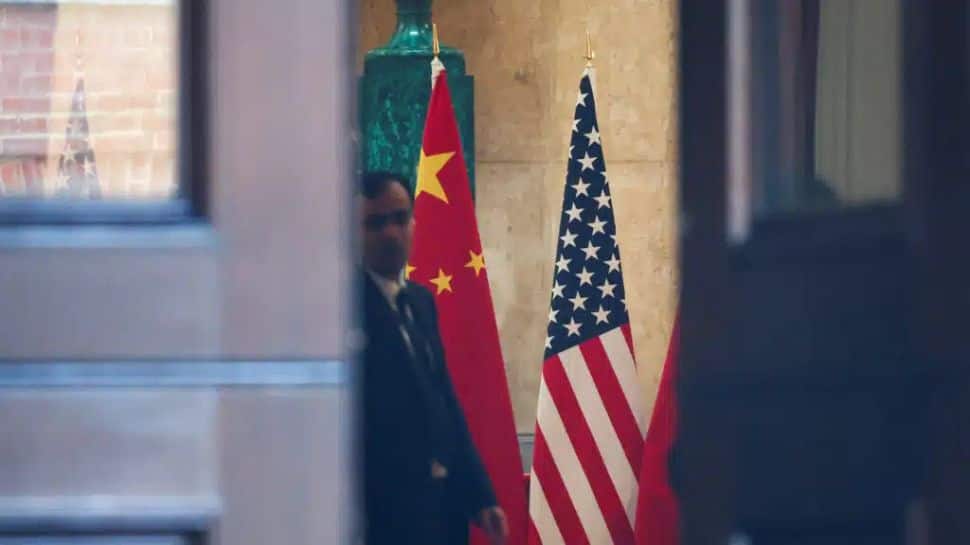
In an effort to defuse global jitters, President Donald Trump has publicly declared that the US seeks to ‘help China’ and avoid harming its economy. The President conveyed a message of respect for Chinese President Xi Jinping, suggesting that the leader might be experiencing a “bad moment” but shares the US objective of preventing a widespread economic depression. This statement aims to reassure the international community about the trajectory of US-China relations.
Simultaneously, the White House has backed Trump’s message, reinforcing the idea of a non-harmful US stance towards China. These declarations come in the wake of China’s threat to implement countermeasures if the US moves forward with its plan to levy a steep 100% tariff on Chinese goods. The imposition of export restrictions on rare earth minerals by China has already escalated tensions, jeopardizing recent positive developments in trade negotiations.
China’s Ministry of Commerce has articulated its opposition to tariff threats, stating that such actions are not conducive to productive dialogue. A spokesperson warned that if the US continues with unilateral measures, China will “resolutely take corresponding measures” to safeguard its interests. While China asserts it does not seek a trade war, it has also affirmed its readiness to engage in one if provoked. The prevailing trade uncertainty has already caused global stock markets to decline and industries to become increasingly wary, evoking memories of earlier, intense tariff disputes.
The looming Trump-Xi summit in South Korea, anticipated in two weeks, is now under a cloud of doubt. President Trump had previously expressed uncertainty about the meeting’s continuation, citing China’s rare earth mineral export policies as a contributing factor to the strained atmosphere.