

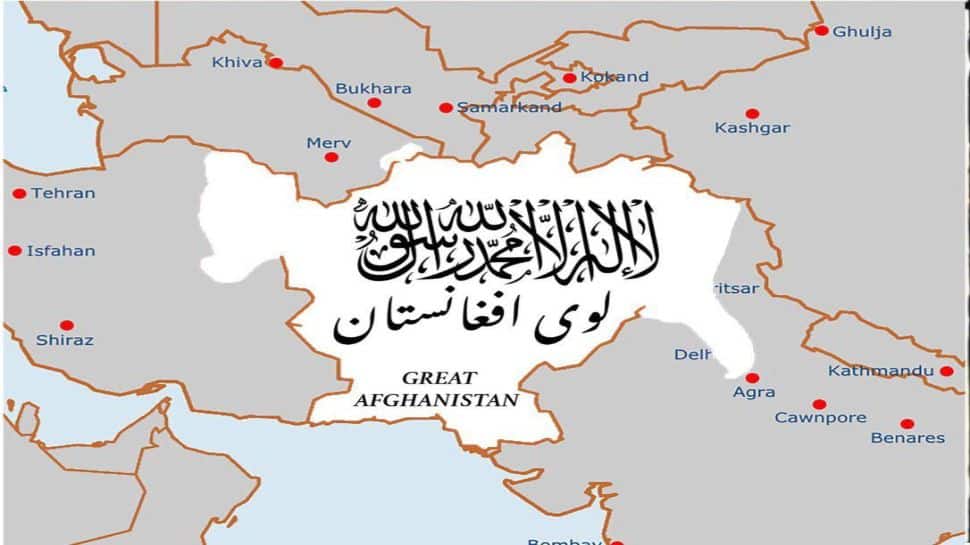
A provocative ‘Greater Afghanistan’ map, unveiled by the Taliban, is escalating tensions with Pakistan by laying claim to significant portions of its territory. The map prominently features parts of Khyber Pakhtunkhwa and other Pashtun-dominated areas, suggesting they are historically Afghan lands. This action directly contradicts the internationally recognized Durand Line, the source of decades of border disputes and military confrontations.
The Durand Line, drawn in the late 19th century, remains a contentious issue, with Pakistan upholding it as the official border and the Taliban rejecting it as a colonial artifact. The ‘Greater Afghanistan’ map, presented to Deputy Interior Minister Mohammad Nabi Omari in Khost, entirely disregards this established boundary. Media reports indicate the map depicts a fragmented Pakistan, with its ethnic regions integrated into Afghanistan. During the presentation, Omari issued a defiant warning to Pakistan, asserting Afghanistan’s readiness to confront any new hostilities.
Adding fuel to the fire, songs at a subsequent Taliban military parade carried overt threats, including the vow to “raise the white flag in Lahore and set Islamabad ablaze.” These bold territorial claims and aggressive pronouncements have generated significant alarm in Pakistan, which is concerned about potential domestic unrest and emboldened militant activity along its western frontier. The map’s release is seen by observers as a clear display of the Taliban’s post-ascension confidence and its revisionist territorial ambitions.