

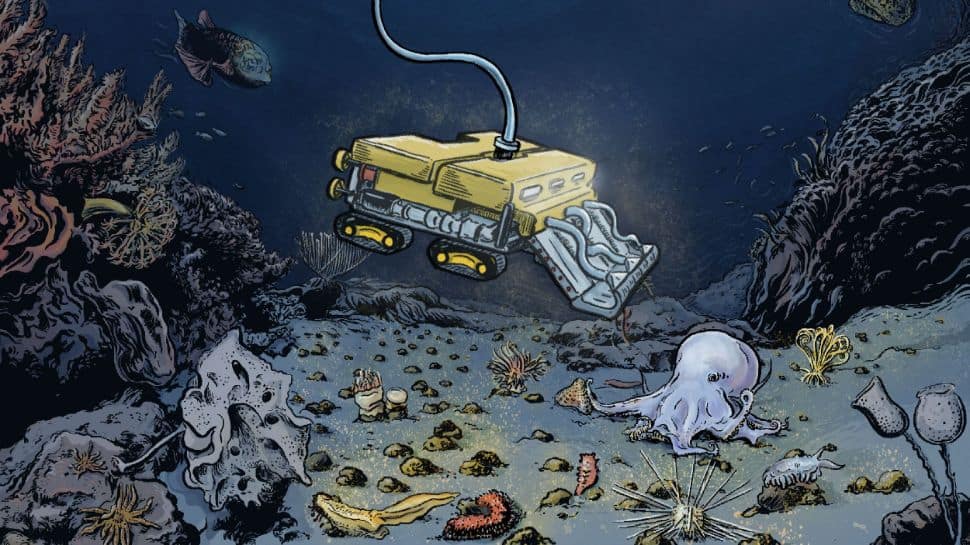
In a move that could reshape the global supply of critical minerals, Japan is advancing plans to extract rare earth elements from deep-sea mud by 2027. The ambitious project targets deposits found at depths of nearly 6,000 meters, aiming to establish a secure domestic source and diminish reliance on China’s dominant market share.
Rare earth elements are indispensable for the production of countless modern technologies, from high-performance magnets in electric vehicles and wind turbines to advanced components in semiconductors and defense systems. As the world accelerates its transition to green energy and digital infrastructure, the demand for these strategic materials is set to surge.
Japan’s strategy involves deploying specialized technology to lift seabed sediment, which will then be transported to the mainland for sophisticated processing. The focus is particularly on elements like dysprosium, a key ingredient for high-efficiency motors used extensively in Japan’s globally renowned automotive sector. Ensuring a consistent supply is vital for industry giants such as Nissan and Suzuki.
The historical context for this initiative includes a significant supply chain disruption in 2010, when China restricted exports of rare earth elements to Japan. This event underscored Japan’s strategic vulnerability and spurred a decade-long effort to diversify its supply chains. While progress has been made, China still holds considerable sway in the global market.
Supported by a dedicated government program, Japan is establishing a processing hub on Minamitorishima island for the initial treatment of the seabed mud. Trial operations are expected to commence in early 2026, followed by a full-scale demonstration in early 2027. This cutting-edge deep-sea mining project represents a substantial investment and a bold step towards resource independence, potentially introducing a significant new player into the global rare earth market.