

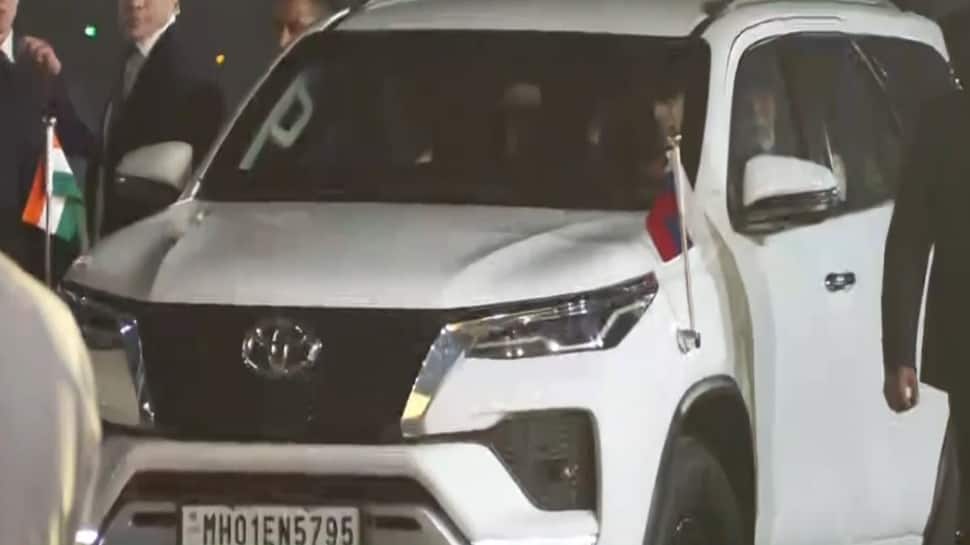
The arrival of Russian President Vladimir Putin in Delhi was marked by a significant protocol breach: Prime Minister Narendra Modi was present to personally greet him on the tarmac. This unexpected gesture immediately became a defining image of Putin’s state visit, conveying a strong message of bilateral relations and strategic intent to the world.
In a move that echoed recent diplomatic exchanges, Prime Minister Modi invited President Putin to travel with him in his own vehicle, a white Toyota Fortuner. This personal touch underscored the deep reservoir of trust and strategic calculation underpinning the India-Russia partnership. The choice of a popular Indian SUV, rather than Putin’s usual state limousine, was a deliberate statement of comfort and mutual reliance.
This overt demonstration of camaraderie and independent policy was clearly aimed at Western capitals. It signaled that India maintains its autonomy in foreign policy, forging partnerships based on its own interests rather than succumbing to external influences. The personalized transport arrangement highlighted New Delhi’s confident approach to global diplomacy.
The selection of a Fortuner, a vehicle common in India, also communicated Moscow’s confidence in India’s security apparatus. It subtly conveyed to regional rivals, like Pakistan, that India provides a secure environment for its international guests. The sight of the two leaders in the standard SUV driving through Delhi served as a potent symbol of India’s sovereignty, its self-assurance, and its ability to maintain strong alliances on its own terms.