

Pakistan’s military leadership is reportedly grappling with renewed anxieties stemming from past failures in satellite intelligence, reminiscent of the critical gaps experienced during ‘Operation Sindoor.’ This historical vulnerability, which reportedly left key officials like Army Chief Asim Muneer and Prime Minister Shahbaz Sharif deeply concerned, is driving a strategic realignment in space technology, with China and Turkey emerging as central partners.
The events of May 2025 proved to be a pivotal moment, exposing a significant weakness in Pakistan’s defense posture. During a crucial military response, the nation’s primary military satellite, PRSS-1, failed to deliver sustained surveillance. It provided only a single image before becoming inoperable, a failure attributed to weather conditions and orbit drift, leaving Pakistan blind to enemy movements.
This intelligence blackout, compounded by the preceding failure of the PakTES-1A satellite, created a critical shortfall in Pakistan’s surveillance capabilities. The dual crisis spurred an urgent decision to entirely rebuild the nation’s space-based monitoring infrastructure, prioritizing this as a matter of national security.
In response to these pressing needs, Pakistan has proactively sought international expertise and capabilities. China has become a dominant partner in this initiative, with Turkey also playing a significant role. The country has also explored collaborations with European firms and maintained back-channel contacts with American entities.
Pakistan has rapidly expanded its satellite fleet. The launch of PAUSAT-1, a 10U nano-class satellite, highlights this progress. Developed in collaboration between Air University and Istanbul Technical University, and launched by SpaceX, PAUSAT-1 features advanced high-resolution cameras and specialized sensors for detailed Earth observation. The partnership with Turkey is viewed as a strategic avenue for acquiring European space technology.
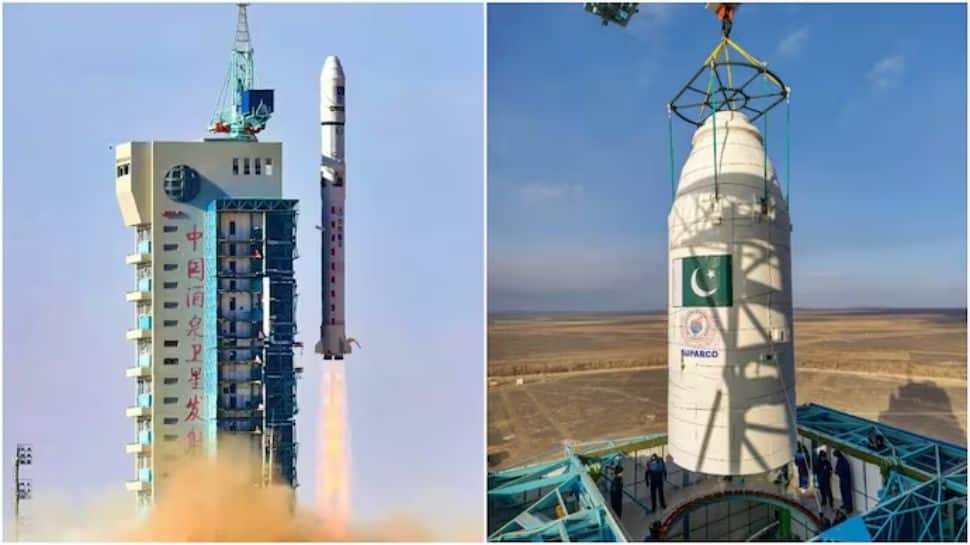
Further enhancing its orbital assets, Pakistan launched PRSC-EOL from China’s Jiuquan spaceport on January 17. Although presented as a Pakistani-manufactured satellite, its design, technology, and launch were China’s responsibility. PRSC-EOL is designed for environmental monitoring with substantial implications for military intelligence.
In October 2024, HS-1 was placed in orbit with China’s launch support. This satellite is equipped with hyperspectral sensors capable of detecting hidden military sites, monitoring activity around airbases, and identifying subtle structural changes, making it a crucial intelligence gathering asset.
The issues plaguing the PRSS-1, including its susceptibility to weather and orbital problems, resulted in critical delays in intelligence dissemination. Pakistan’s limited ground station capacity, with one station affected by severe flooding, further complicates matters. The lengthy 36-48 hour wait for commercial satellite imagery from providers like Airbus is inadequate for real-time conflict management, contrasting sharply with the quicker turnaround provided by Chinese systems.
Looking ahead, Pakistan is prioritizing the development of its own Synthetic Aperture Radar (SAR) satellites, with a target deployment in 2026-27. SAR technology offers critical all-weather and night-time imaging capabilities, promising to significantly enhance Pakistan’s real-time defense awareness and operational effectiveness.