

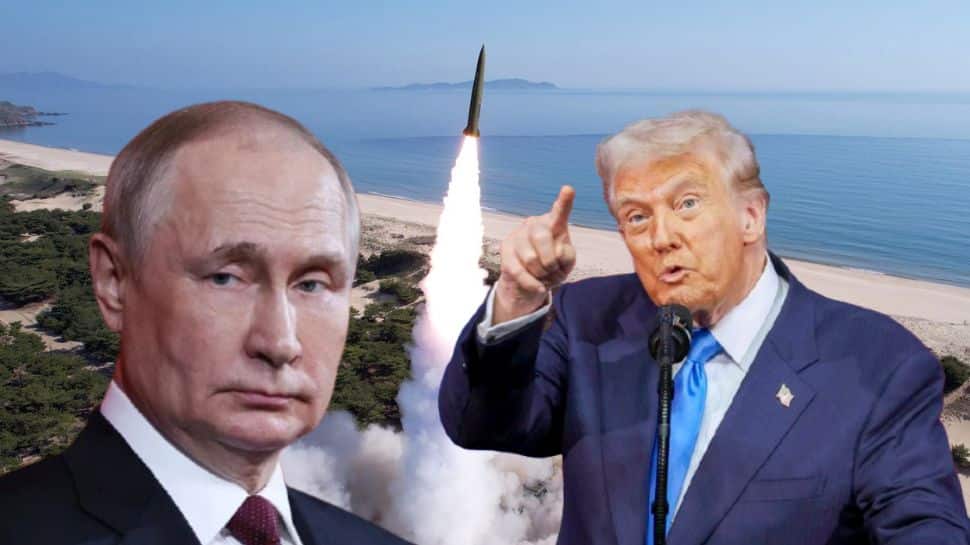
President Donald Trump declared Thursday that the United States will immediately restart nuclear weapons testing, ending a moratorium spanning over three decades. This dramatic announcement is widely seen as a direct reaction to Russia’s recent successful tests of its advanced nuclear-powered weapons, including the Poseidon torpedo and the Burevestnik cruise missile, both designed to overcome U.S. defenses.
The deployment of these new Russian super-weapons, which can operate stealthily underwater for extended periods and possess intercontinental range, has prompted a swift response from the U.S. President. Trump cited the “testing programs” of other nations as the impetus for his decision, highlighting the strategic challenges posed by Russia’s latest military developments.
Assessing the global nuclear landscape, Trump ranked the U.S. as the leading nuclear power, followed by Russia, with China positioned as a rapidly developing third. He issued a stark warning that China is expected to achieve nuclear parity with Russia within the next five years. This projected shift, combined with Russia’s novel weaponry, raises significant questions about the long-term stability of America’s nuclear deterrent.
The President’s directive to the Department of War emphasizes initiating testing “on an equal basis” with other countries, stressing an immediate and proportionate response. This indicates a commitment to mirroring the testing activities of potential adversaries. The U.S. re-entry into nuclear weapons testing signifies a potential resurgence of a global arms race, heightening international security concerns and reshaping strategic dynamics worldwide.