

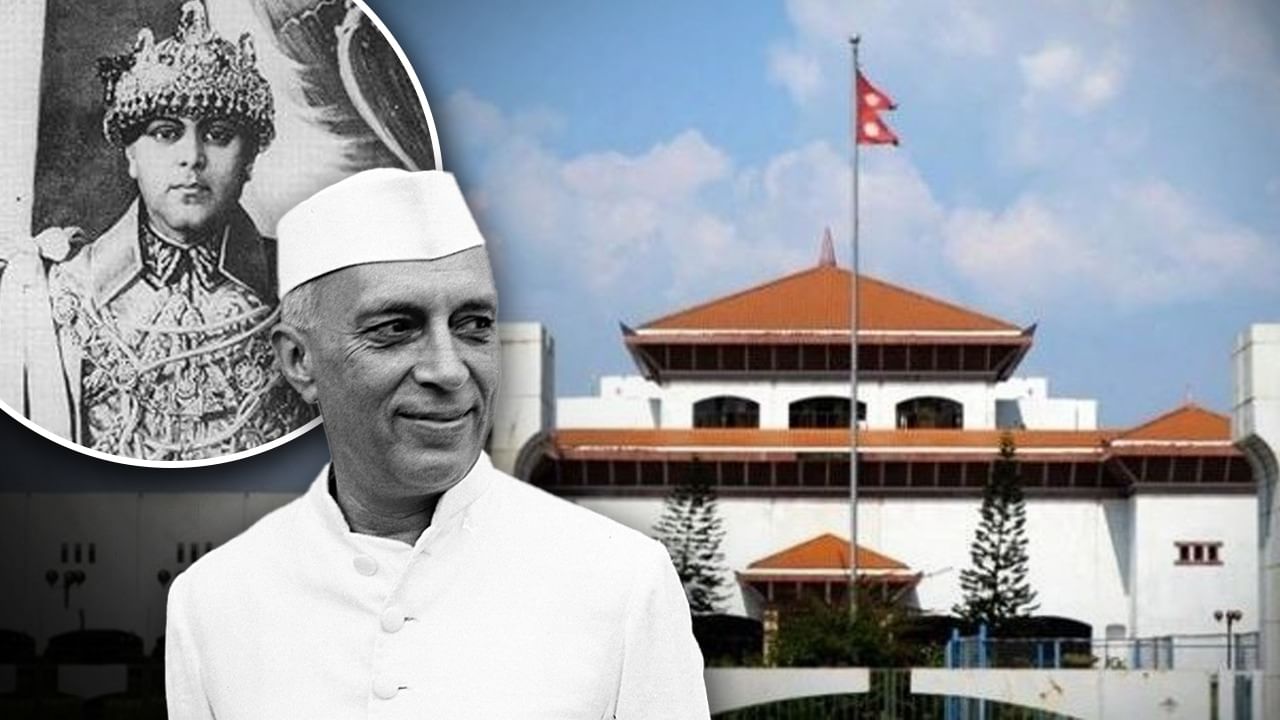
Seventeen years after embracing democracy, Nepal’s government is facing significant challenges. The political actions of KP Sharma Oli have raised questions about the viability of the current system. Since the advent of democracy, Nepal has seen 13 different prime ministers, with none completing their full five-year terms.
This persistent turnover has resulted in ongoing instability. This year alone has witnessed two significant protest events. In June 2025, a movement was launched nationwide, including in Kathmandu, to restore the monarchy. The subsequent months saw violent demonstrations by Generation-Z.
This situation raises crucial questions: Why is democracy failing to thrive in Nepal, where a majority (82%) of the population is Hindu? Could a return to the Nehru model of governance offer a solution?
The Nehru Model: A Historical Perspective
In 1950, during Jawaharlal Nehru’s tenure as India’s Prime Minister, Nepal was mired in political instability. Nehru intervened, which led to the end of the Rana regime and the installation of Tribhuvan Shah as king. Nehru facilitated a series of talks in New Delhi in 1951 involving Tribhuvan Shah and other key figures.
The primary outcomes of these discussions included the formation of an interim government and the establishment of a framework for governance. Under this agreement, the king would retain authority over military and foreign affairs, while an elected Prime Minister would head the executive branch and report directly to the king. The Prime Minister was granted extensive powers for governing.
Matrika Prasad Koirala was appointed as Prime Minister, but political instability prevented him from serving a lengthy term. When Tribhuvan Shah died in 1955, his son, King Mahendra Shah, ascended to the throne. Mahendra subsequently implemented the rules established during his father’s reign with greater force.
Birendra P Mishra, Nepal’s former Election Commissioner, highlights in his writings on Nehru and Nepal, that Nehru insisted that Nepal consult with India on any diplomatic relations with China and the Soviet Union.
Nehru regarded Nepal as a crucial neighbor, sharing a lengthy border of 1751 kilometers. He emphasized that any unrest in Nepal would have direct repercussions for India. The two nations shared a rich cultural heritage and close familial and economic ties.
A Period of Relative Stability
After the death of Tribhuvan Shah, Mahendra, and then Birendra Bikram Shah ruled Nepal. Mahendra subsequently dismissed BP Koirala’s government. Nehru openly criticized the King of Nepal in India’s Rajya Sabha in 1960. During this period, Nepal was largely free from major political upheavals and violent incidents.
After Nehru’s time, Nepal saw minor political changes until the 1980s, yet the country largely maintained stability. However, the 1980s saw a period of unrest. In 1989, widespread protests arose regarding issues of employment and economic concerns. The King dismissed Prime Minister Marich Man Singh Shrestha in an effort to quell the unrest, but it continued.
In the early 1990s, certain missteps by King Birendra Bikram Shah’s family contributed to the strengthening of the democratic movement. By 2005, the King agreed to concede to the demands of the democratic activists, and an agreement was reached in 2006. However, despite these measures, Nepal continues to experience political instability.