

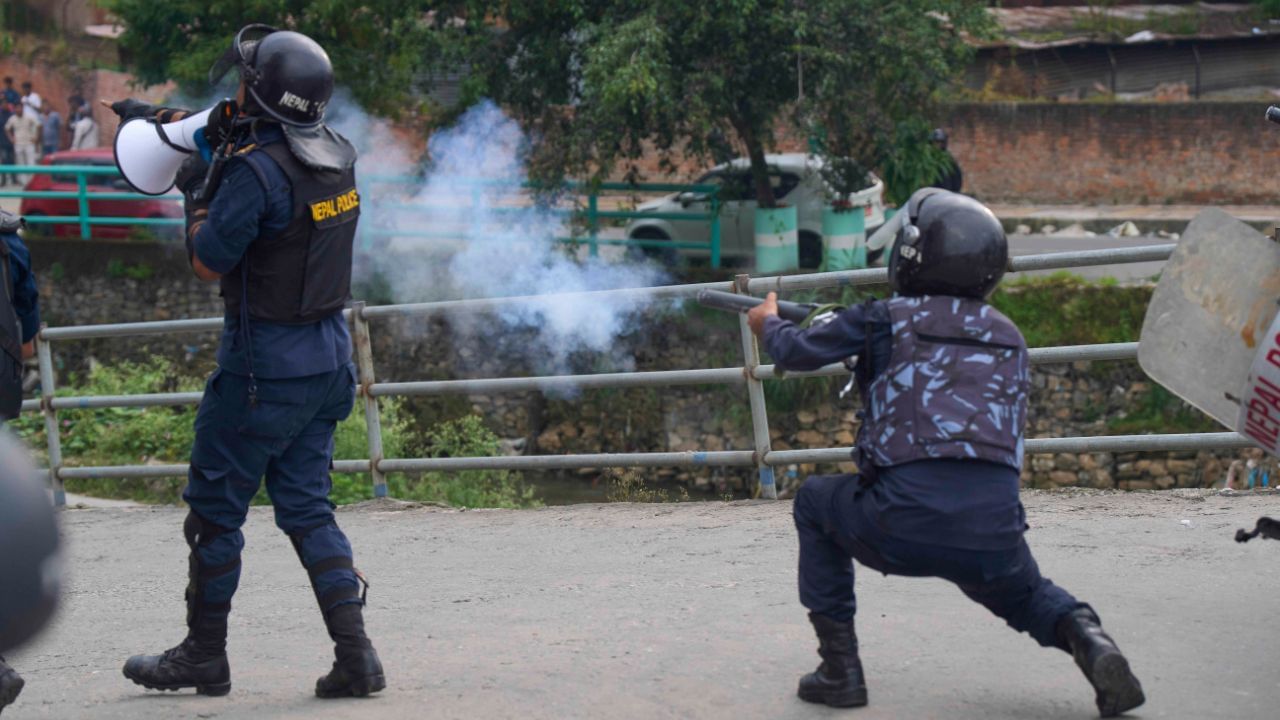
Following violent confrontations in Nepal, the Oli government has been forced to retreat. Thousands of young people from the Gen-Z generation demonstrated in Kathmandu and other urban areas against a ban on social media applications. The protests resulted in 19 deaths and more than 300 injuries. In response, the Nepalese government removed the restriction on social media later that evening. This follows Prime Minister K.P. Sharma Oli’s prior refusal to revoke the prohibition. Here are 10 major updates on the violence and protests in Nepal.
1. Inquiry into Violence: Prime Minister Oli expressed his sorrow for the deaths and stated that some anti-social elements were involved in the peaceful demonstrations. He added that force was required to protect government assets. The Prime Minister emphasized that the government’s goal was not to shut down social media but to regulate it. Oli announced the formation of an investigation committee that will submit a report within 15 days.
2. Youth Asked to End Protests: The Minister of Information and Broadcasting, Prithvi Subba Gurung, stated that the social media ban was lifted following an emergency cabinet meeting. The Minister also urged the Gen Z youth to call off their protests. The youth, however, have announced that they would increase their protest activity from Tuesday.
3. Oli Won’t Resign: After the events on Monday, Home Minister Ramesh Lekhak resigned. Minister of Information and Broadcasting Prithvi Subba Gurung said that PM Oli would not be resigning. The government decided to remove the social media ban in response to the demands of the youth. The government will offer compensation to the families of the deceased and provide free treatment to the injured.
4. Information on Casualties: 17 protesters died in Kathmandu, and 2 protesters died in the Sunsari district of eastern Nepal. More than 347 injured individuals are receiving treatment.
5. Curfew Implemented in Kathmandu, Army Deployed: After the situation became uncontrollable on Monday, the army was deployed in Kathmandu. The army has taken control of the regions surrounding the Parliament building. After the violence, the administration imposed a curfew in Kathmandu, Lalitpur, Pokhara, Butwal, and Itahari. During the curfew, all assemblies, rallies, and movement will be prohibited.
6. Origins of the Protests: Thousands of young people protested in front of the Parliament building in Kathmandu. They were demanding that the government lift the ban. The demonstration grew violent when some people entered the Parliament complex. Police used water cannons, tear gas, and opened fire to disperse the crowd.
7. Government is Not Against Social Media: Prime Minister Oli stated that the government is not against social media, but those earning in the country must abide by the law. He referred to the protesters as puppets. Journalists and technology organizations also protested against the ban.
8. UN and Western Countries Expressed Concerns: The United Nations Human Rights organization expressed sorrow about the violence and requested a fair investigation. The United States, the United Kingdom, and other countries expressed their shock at the violence and offered their condolences to the deceased.
9. Why the Ban Was Imposed: The government banned 26 social media apps, including Facebook, Instagram, YouTube, WhatsApp, Reddit, and X, because they had not registered with the government within the allotted time. The government stated that the measure was taken in an effort to enforce regulations, not to censor. The youth, however, took to the streets to demonstrate.
10. The Protests Were Not Only About Social Media: The youth have blamed the government for unemployment, corruption, and an economic downturn. The youth created the Nepo Kid trend on social media. They claimed that the children of the leaders were taking advantage of amenities obtained through corruption. The opulence of the leaders’ children and the unemployment of the general public were compared. The Oli administration has been accused of failing to keep its promise to eradicate corruption.