

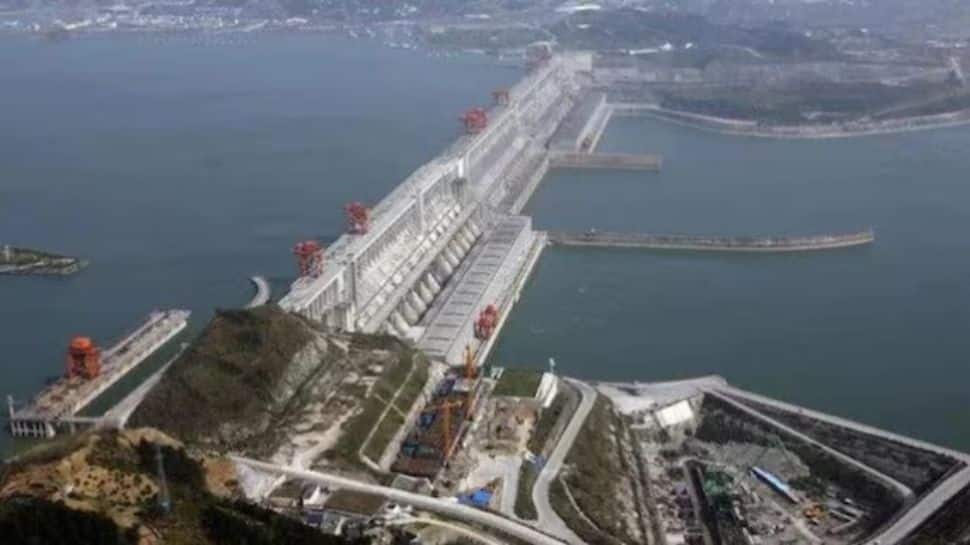
China has initiated construction on a massive hydroelectric project, dubbed a “mega dam,” on the Yarlung Zangbo River in Tibet, close to the Indian border. This ambitious undertaking involves creating a series of five power stations along a steep 31-mile canyon, with the goal of generating approximately 300 billion kilowatt-hours of electricity annually by the 2030s. The power output is primarily intended for China’s coastal regions and industrial hubs, with some energy allocated for Tibet.
The Yarlung Zangbo River is the source of the Brahmaputra, a river indispensable for the water security of India and Bangladesh, supporting drinking water, agriculture, and livelihoods for about 1.3 billion people. Concerns are high in both countries about the potential impact of this colossal dam, managed by the new China Yajiang Group at an estimated cost of 1.2 trillion yuan. Analysts warn of possible water diversion, altered flow patterns, and disruptions to seasonal water availability. Chinese Premier Li Qiang has referred to it as a “project of the century,” while also mentioning ecological safety.
Significant environmental and geological challenges are associated with the project. The dam site is located on the seismically active Tibetan Plateau, a region also facing impacts from climate change that are altering glacial melt patterns and increasing the risk of glacial lake outburst floods. The construction itself has already contributed to the displacement of local populations in Tibet, a trend that could affect over a million people with future projects, potentially leading to the loss of vital traditional ecological knowledge.
While China promotes the dam as a vital component of its renewable energy goals and a replacement for coal power, environmental critics highlight the inherent ecological costs. The creation of large reservoirs can submerge forests and wetlands, leading to the decomposition of vegetation and the release of potent greenhouse gases like methane. Many advocate for less disruptive renewable energy sources such as solar and wind power.
This mega dam also carries considerable geopolitical implications, as upstream water control can be a source of leverage. Despite China’s assurances regarding ecological responsibility and respect for regional water needs, past incidents involving shared river data have instilled caution in India and Bangladesh. Both nations are closely monitoring the project. India has stated its intention to observe developments, while Bangladesh is focused on maintaining stable water flows. The project’s development will significantly influence China’s energy infrastructure and the dynamics of regional cooperation and trust in South Asia.