

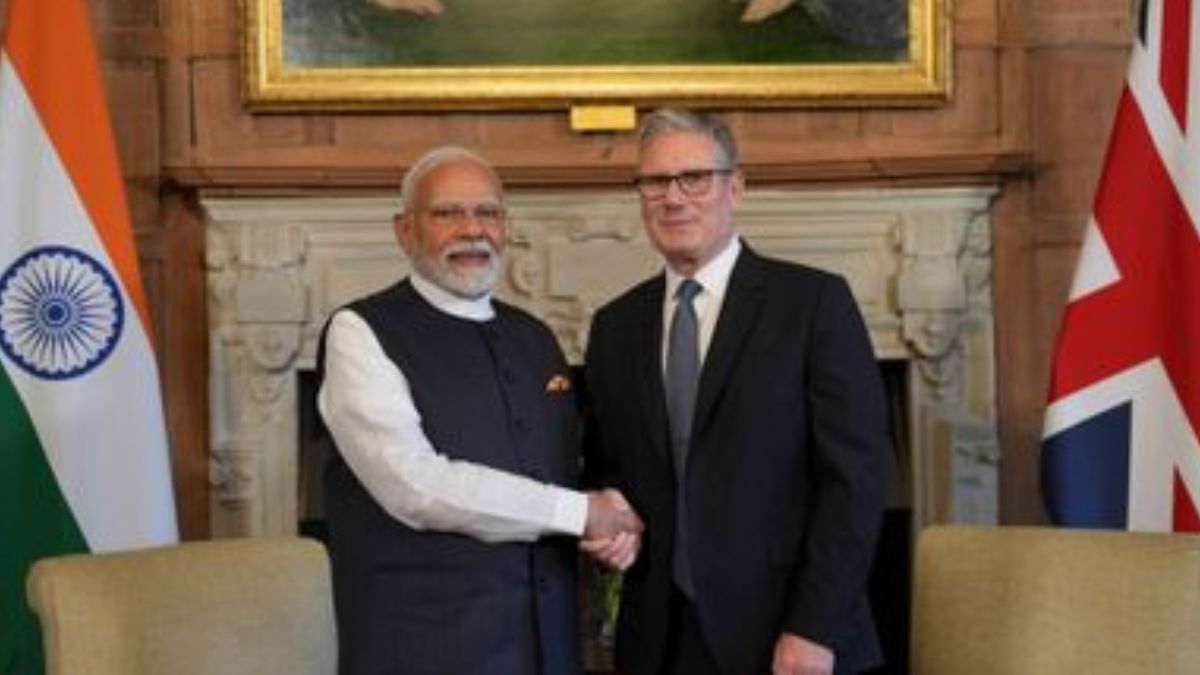
Prime Minister Narendra Modi praised the signing of the India-UK Free Trade Agreement on Thursday, declaring it a historic day for the relationship between the two nations. Speaking at a joint press conference with UK Prime Minister Keir Starmer, PM Modi highlighted the increased market access and economic benefits the agreement will bring to both countries. He also expressed appreciation for the warm welcome he received during his visit.
“Today marks a historic day in our bilateral relationship,” PM Modi remarked, pointing to the conclusion of the Comprehensive Economic and Trade Agreement. The FTA, signed by PM Modi and Keir Starmer, is intended to facilitate greater trade between the two nations. PM Modi said the agreement is a foundation for mutual prosperity.
The FTA is expected to benefit Indian sectors such as textiles, footwear, gems, jewellery, seafood, engineering goods, agricultural products, and processed foods by giving them better access to the UK market. The UK will gain improved access to the Indian market for its products, including medical devices and aerospace components. The aim of the deal is to lower tariffs on imports and exports, which should make products from both countries more competitive. Both nations aim to increase their trade to USD 120 billion by 2030.
The FTA is expected to boost sectors such as textiles, leather, footwear, sports goods, toys, marine products, gems and jewellery, engineering goods, auto parts, engines, and organic chemicals. India’s Commerce and Industry Ministry noted that the FTA provides extensive market access across all sectors, covering all of India’s export interests. India will gain from tariff elimination on almost all tariff lines, offering huge opportunities for increasing bilateral trade.
The UK government said that India’s average tariff on UK products will be significantly reduced. UK companies selling products to India, from soft drinks to medical devices, will find it easier to do so. British whisky producers will benefit from dramatically reduced tariffs, giving them an edge in the Indian market.