

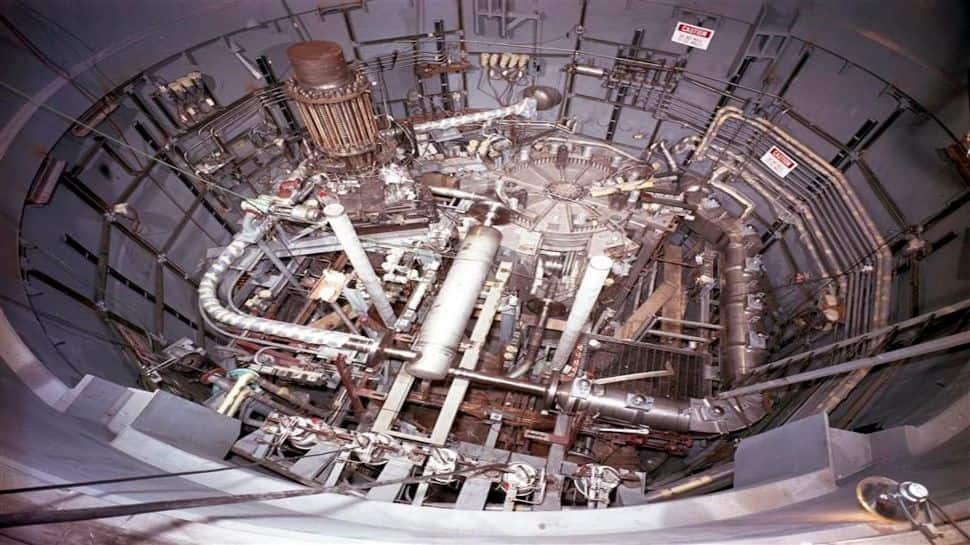
China has announced a historic triumph in nuclear energy, achieving a successful thorium-to-uranium conversion within a molten salt reactor. This milestone is rooted in decades-old American research, positioning China as a leader in a revolutionary clean energy technology.
The two-megawatt Thorium Molten Salt Reactor (TMSR), a project of the Shanghai Institute of Applied Physics nestled in the Gobi Desert, has officially verified the process of using thorium as a viable nuclear fuel source. This achievement breathes new life into a concept once explored by the U.S. in the mid-20th century.
According to reports, Chinese scientists meticulously studied declassified U.S. materials related to molten salt reactors, a technology that was sidelined due to strategic decisions during the Cold War. China now claims this legacy, bringing the concept from theoretical blueprints to operational reality.
The implications for energy security and environmental sustainability are profound. Thorium, unlike uranium, is readily available globally, less radioactive, and generates significantly less problematic long-term nuclear waste. This offers a cleaner, more sustainable alternative to current nuclear power generation, mitigating the health risks and environmental damage associated with uranium mining.
With a larger, 10-megawatt version already in development for commercial electricity production, China’s TMSR technology promises efficient energy generation, especially in arid environments where water conservation is critical. Traditional reactors require vast amounts of water for cooling, a limitation the TMSR bypasses.
This Gobi Desert experiment signifies more than just a scientific success; it represents a potential global energy revolution, demonstrating how overlooked innovations can be resurrected to meet modern challenges and usher in an era of cleaner, more abundant power.