

Indonesia’s grand project to relocate its capital to Nusantara, deep within the Borneo rainforest, is facing a critical juncture, with fears mounting that it could become a sprawling ‘ghost city.’ The vision, initiated by former President Joko Widodo, was to create a modern, sustainable administrative hub, alleviating the severe overcrowding in Jakarta by 2030.
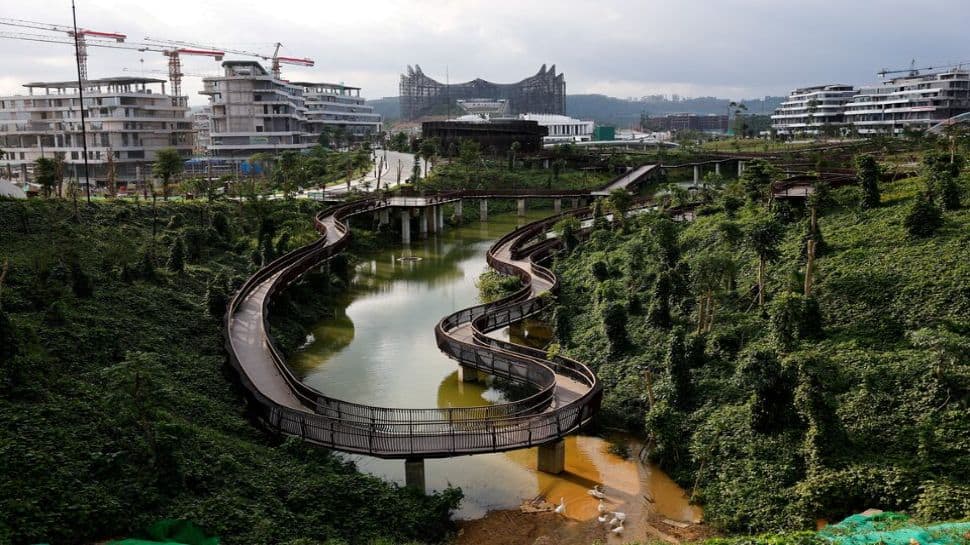
However, the reality on the ground in Nusantara paints a less optimistic picture. Wide, empty roads are lined with government buildings that are still under construction. Aside from a few groundskeepers and inquisitive visitors, the promised vibrant city is far from realized. The situation has become more precarious under President Prabowo Subianto’s administration, which has significantly slashed funding. The project’s budget for 2025 has been reduced to approximately 700 million pounds, a sharp decrease from the roughly 2 billion pounds received in 2024. For the following year, only 300 million pounds has been approved, one-third of the requested sum. Private investment has also failed to materialize as anticipated, falling short by over 1 billion pounds.
Adding to the unease, President Prabowo has not visited Nusantara since taking office. His administration designated Nusantara as the “political capital” in May, but this official announcement was delayed by four months. The project’s oversight agency has also experienced leadership instability, with its head and deputy head both resigning in 2024, further fueling speculation about the capital’s uncertain future.
Currently, Nusantara hosts around 2,000 government employees and 8,000 construction workers. This number is significantly lower than the projected 1.2 million residents by 2030. While the city is equipped with essential infrastructure, including apartment buildings, government offices, roads, hospitals, and an airport, most of it remains unfinished.
Scholars are warning of a potential ‘ghost city’ scenario. Hardiansyah Hamzah, a constitutional law expert, points out that the “political capital” designation lacks substantial legal backing in Indonesia and suggests that Nusantara is not a priority for the current government. The dream of a futuristic capital for the world’s most populous Muslim nation is now overshadowed by a palpable sense of uncertainty, with its destiny hanging precariously between grand aspirations and potential abandonment.