

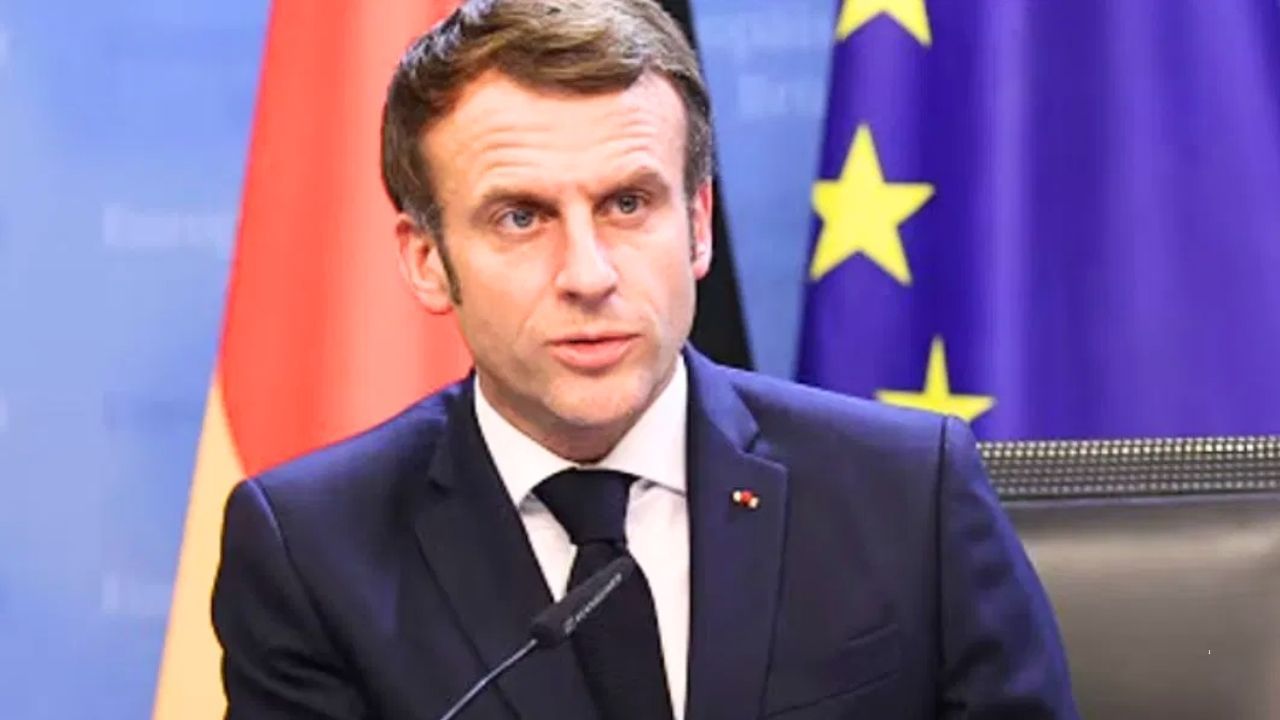
President Emmanuel Macron declared France’s official recognition of Palestine, joining the UK and Canada in this move. The announcement occurred during a UN conference co-hosted by France and Saudi Arabia, designed to boost support for a two-state solution to the Israeli-Palestinian dispute. The declaration by Macron was met with applause from over 140 leaders gathered in the UN General Assembly hall. He underscored France’s long-standing commitment to Middle East peace. Although the practical ramifications of this recognition remain unclear, especially considering ongoing Israeli actions in Gaza and settlement expansion in the West Bank, the symbolic importance is notable.
The announcement was made at the start of a meeting with world leaders. Palestinian President Mahmoud Abbas was unable to participate as he and other Palestinian officials were denied US visas. UN Secretary-General António Guterres stated that statehood is a right for Palestinians, a position that contrasts with the Israeli government’s. The UK, Canada, Australia, and Portugal have also recognized Palestine. Roughly three-quarters of the UN recognizes Palestine, but significant Western countries had previously avoided doing so. The Palestinians have welcomed the steps, looking forward to eventual independence.
The Israeli government, led by Benjamin Netanyahu, has opposed the recognition of a Palestinian state. Israel has suggested it might take unilateral steps in response, potentially including annexing parts of the West Bank. UN Spokesperson Stéphane Dujarric said efforts toward a two-state solution must proceed, irrespective of Israeli actions. Netanyahu will meet with President Donald Trump to discuss Israel’s response. The Trump administration opposes the rising recognition of a Palestinian state and considers it responsible for disrupting ceasefire talks. The Palestinian political arena is fragmented, with Abbas’s internationally recognized Palestinian Authority administering parts of the West Bank. France and Saudi Arabia have proposed a plan, backed by the UN General Assembly, for a reformed Palestinian Authority to govern the West Bank and Gaza with international support. Israel argues that the Palestinian Authority isn’t fully committed to peace and accuses it of extremism. Hamas has indicated a willingness to accept a state based on 1967 borders.
Peace talks between Israel and the Palestinians, mediated by the United States, repeatedly collapsed due to violence and the expansion of Israeli settlements. Supporters of a two-state solution believe that the alternatives to a Palestinian state are either the status quo, where millions of Palestinians are under military occupation, or a bi-national state lacking a Jewish majority.