

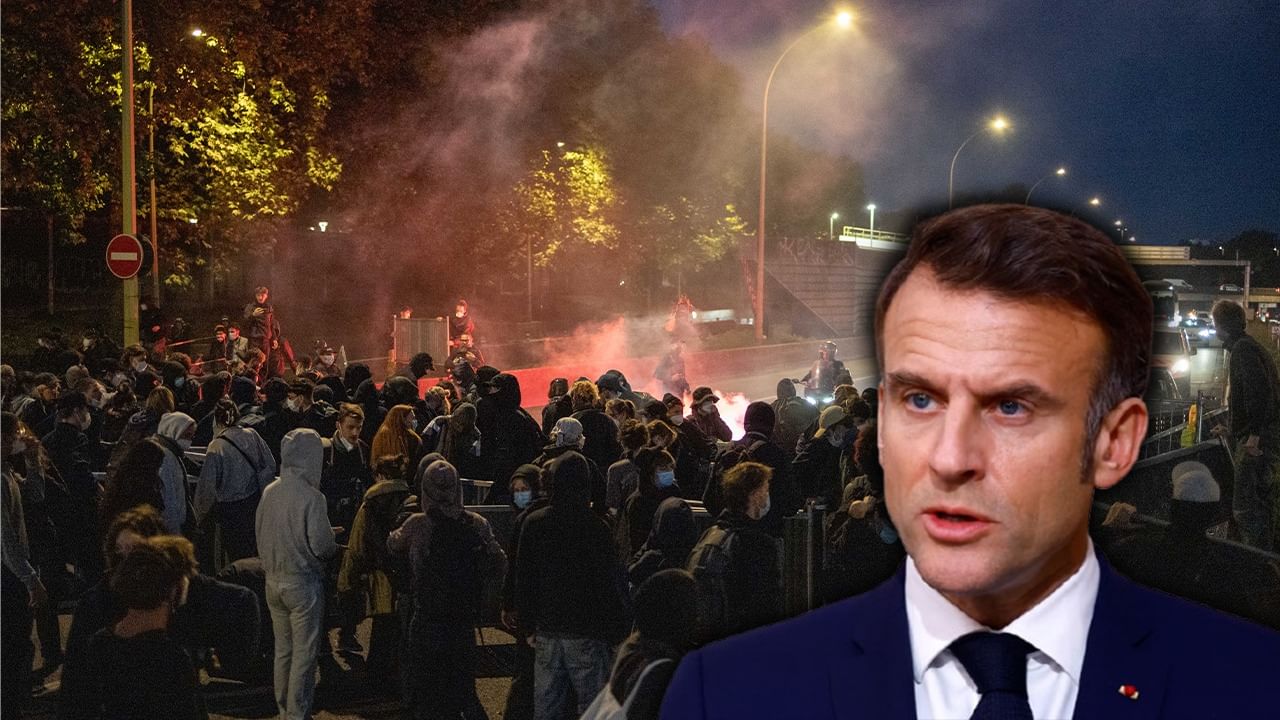
Following the recent protests in Nepal, France is now witnessing widespread unrest, with the ‘Block Everything’ movement at the forefront. On Wednesday morning, the movement initiated a series of actions that caused significant disruption across the country, including highway blockades, instances of arson, and general disorder. Several buses were also set ablaze.
Despite a considerable security presence, major cities, including Paris, have seen a deterioration in order. This surge of protests arrives amidst a period of political instability in France, where Parliament recently voted out Prime Minister François Bayrou in a no-confidence motion. President Emmanuel Macron was then compelled to appoint Sébastien Lecornu as his fifth Prime Minister.
‘Block Everything’ is not simply a protest; it is based on the belief that the current political system is failing the people. Initially started by right-wing groups, it has now gained support from left-wing and far-left factions.
The protesters’ central demand is to halt the functioning of the country if the system doesn’t work. They, therefore, aimed to paralyze highways, cities, and transportation systems, which is reflected in the movement’s name. In an attempt to manage the situation, the government has deployed 80,000 security forces, with 6,000 specifically in Paris. French media estimates that approximately 100,000 individuals may be involved in the protests.
The current events evoke memories of the 2018 ‘Yellow Vest’ movement. Back then, public discontent over rising fuel prices led to protests that broadened into a movement against President Macron’s policies. The circumstances today bear a resemblance to that period.
Interior Minister Bruno Retailleau stated that approximately 50 masked individuals attempted to block highways in Bordeaux. A cable fire in Toulouse led to traffic congestion. Paris police confirmed the arrest of 75 protesters, and the Vinci company reported traffic disruptions in major cities such as Marseille, Montpellier, Nantes, and Lyon.