

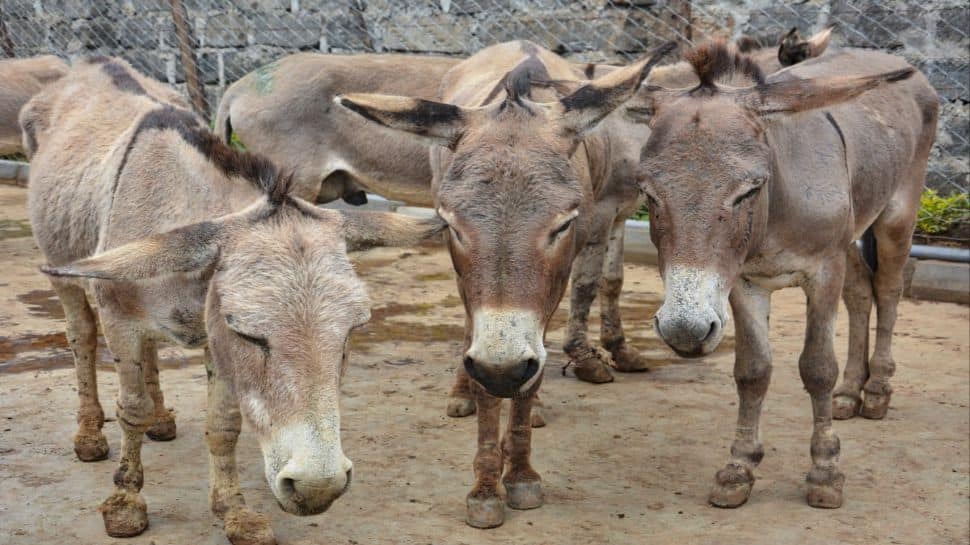
China’s pursuit of Ejiao, a traditional remedy made from donkey skins, is driving immense cruelty and a concerning decline in donkey populations worldwide. Millions of donkeys are killed annually, with their skins boiled to create Ejiao, a product highly sought after for its perceived anti-aging and health-boosting properties. This gelatinous substance, used in tonics, skincare, and even food, has seen its market value skyrocket, fueled by growing demand from China’s middle class.
The ethical implications of this trade are severe. Donkeys are often sourced under duress from countries like those in Africa and Pakistan. They endure arduous journeys, mistreatment, and inhumane slaughter before their skins are processed and sold. The scale of this operation is staggering, with figures suggesting over six million donkeys are slaughtered each year. This unsustainable demand has already had a devastating impact on wild and domestic donkey populations. For example, Botswana’s donkey numbers have shrunk dramatically in recent years. If this trend continues, predictions indicate a significant reduction in Africa’s donkey population within the next 15 years. The global demand for Ejiao underscores a grim reality where the pursuit of traditional medicine and modern wellness comes at an unbearable cost to animal welfare and biodiversity.