

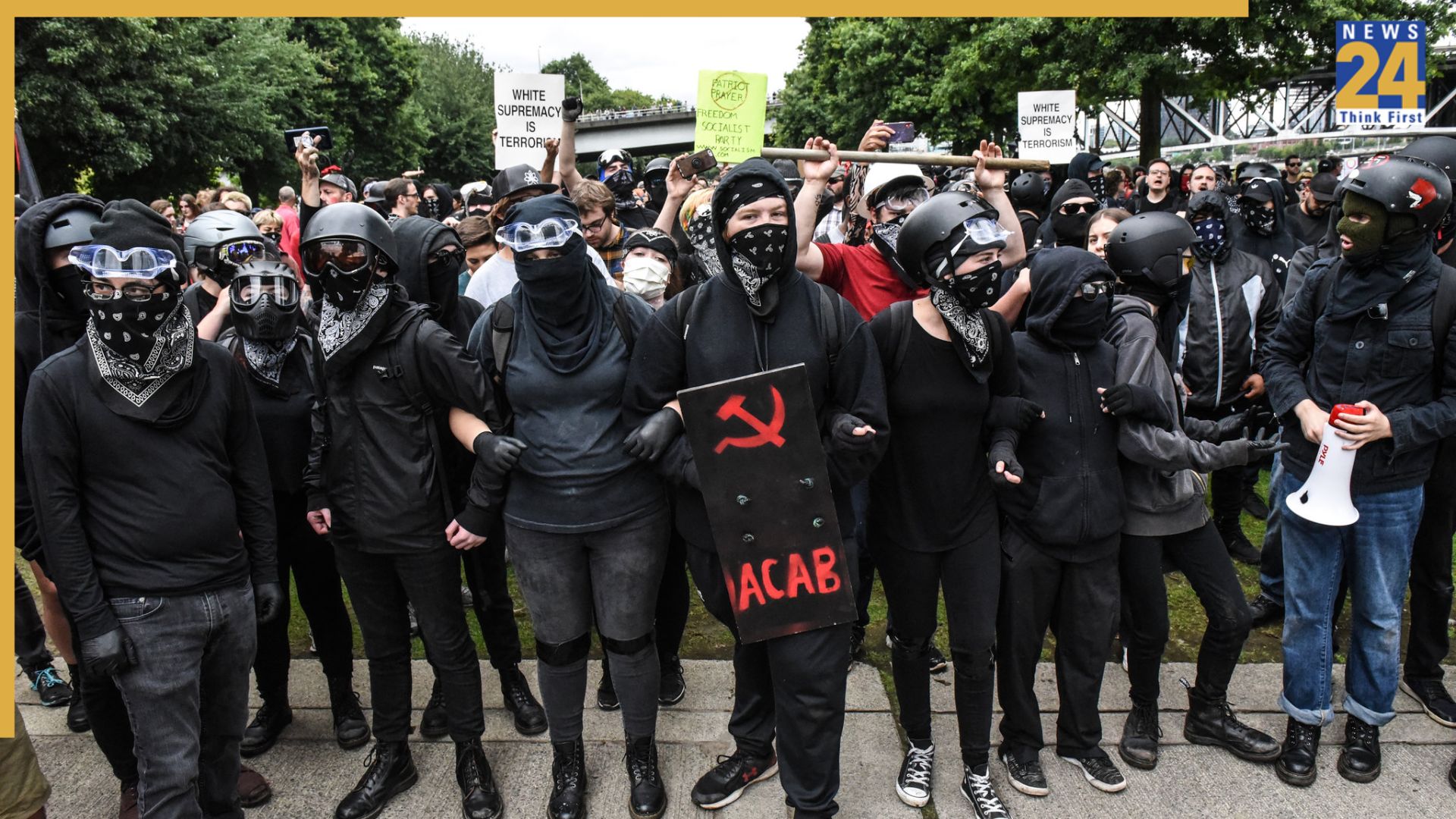
President Donald Trump’s recent classification of Antifa as a “major terrorist organization” has added fuel to the already existing political firestorm in the United States. This declaration, made on his social media platform, Truth Social, was accompanied by a call for investigations into those providing financial support to the group. The timing of this announcement, coming after the murder of conservative activist Charlie Kirk, has heightened existing ideological tensions.
Antifa, a term that stands for “anti-fascist,” is a loosely connected assembly of activists and militants. They share a common goal: to resist fascism, racism, nationalist ideology, white supremacy, and right-wing politics. Despite the media’s portrayal, Antifa isn’t a highly structured organization but rather a network of independent groups lacking a central authority. Most of its members align with left-wing ideologies, often embracing anarchist or communist viewpoints.
Antifa’s roots lie in historical movements that stood against authoritarianism and white nationalism. Today, the movement actively opposes right-wing extremism, authoritarian tendencies, homophobia, anti-immigration sentiments, and racism. Many Antifa followers also reject capitalism and criticize existing government systems.
The organization gained widespread attention during the Black Lives Matter protests, which emerged in 2020 following the police killing of George Floyd. Although the majority of these protests were peaceful, some locations saw instances of violence, vandalism, and looting. Consequently, Antifa has been repeatedly blamed for these acts by both politicians and the media.
Antifa is not structured as a formal organization in the traditional sense. It is a vast ideological movement comprising various independent individuals and groups. Coordination is usually achieved through social media and encrypted messaging applications. Trump’s actions, taking place amidst heightened national tensions due to the murder of Charlie Kirk, could significantly widen the political divide.