

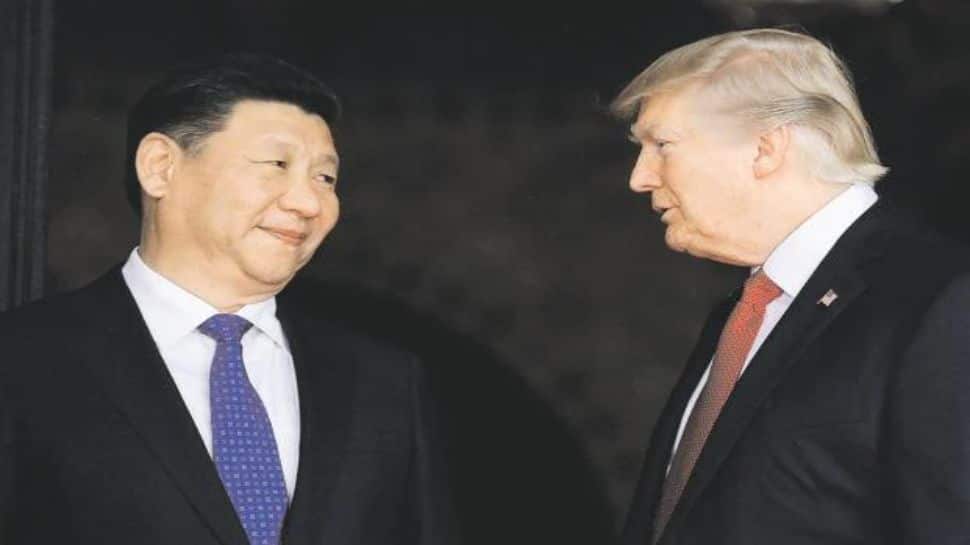
President Donald Trump has signaled a significant escalation in US-China trade relations by announcing a substantial 155% tariff on Chinese imports, scheduled to begin on November 1st. Trump stated his preference for a friendly relationship with China but underscored that years of unfavorable trade deals necessitated this decisive action. He criticized past US administrations for failing to protect American economic interests, allowing countries like China to exploit trade loopholes.
The President defended the use of tariffs as a critical tool for bolstering national security, citing successful applications in his dealings with the EU, Japan, and South Korea. He projected that these measures would generate vast revenues for the US, potentially in the trillions, which could be utilized for debt repayment. This move significantly amplifies the administration’s strategy of imposing ‘secondary tariffs’ on nations that facilitate Russia’s war in Ukraine through energy transactions. China, being a leading importer of Russian crude oil, is now facing these aggressive trade penalties.
Furthermore, President Trump confirmed that export controls on all critical software will also be implemented from November 1st. He characterized China’s recent global communication regarding export controls as an “unheard of” and “moral disgrace” in international trade practices. Despite the tough economic stance, Trump conveyed a positive outlook for his upcoming meeting with President Xi Jinping in South Korea, expecting constructive dialogue. He indicated that China is aware of the impending 155% tariff and that the negotiations would likely focus on these new trade conditions, positioning the US favorably for the talks.