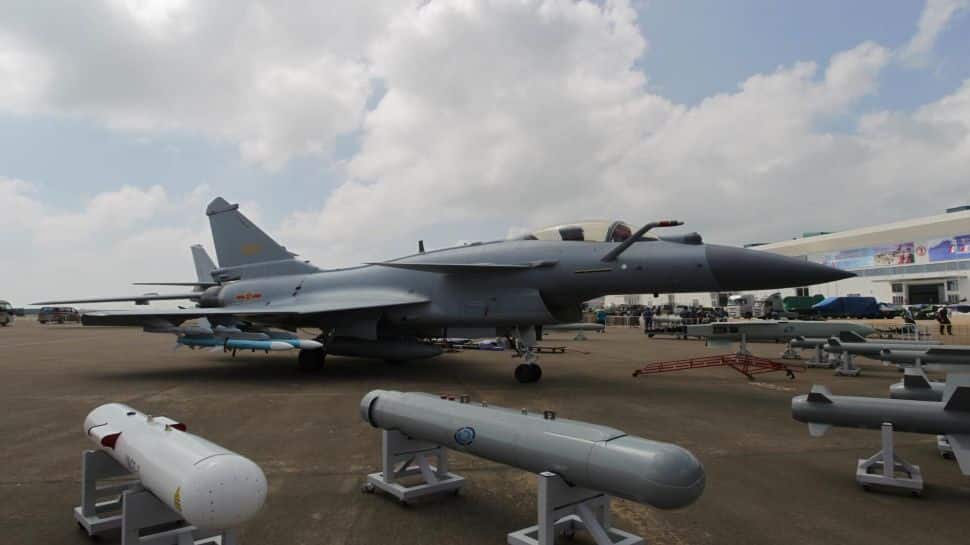

China’s People’s Liberation Army Air Force (PLAAF) is rapidly developing a formidable new generation of air power, focused on stealth, extended range, and networked operations that are reshaping the strategic landscape in Asia. This advanced air capability, including cutting-edge stealth jets and sophisticated drones, is a key area of focus for global defense observers. At the forefront of this modernization are the J-35 and its naval variant, the J-35A, which represent China’s significant advancement into the realm of fifth-generation multirole fighters. These aircraft are engineered to serve as critical sensors within a larger combat network, capable of internal weapons carriage to maintain their stealthy profiles, similar to leading Western designs. The J-35A’s specific adaptations for carrier deployment, including enhanced landing gear and corrosion resistance, underscore China’s growing maritime power projection ambitions and its expanding carrier fleet. Bolstering its command and control, the KJ-3000 airborne early warning and control (AEW&C) platform offers extensive radar coverage and battlefield management capabilities. This sophisticated system is designed to coordinate multiple air assets and missile defense systems in real-time, significantly amplifying operational effectiveness. China’s commitment to exploring next-generation fighter concepts is exemplified by the experimental J-50 stealth fighter. Its advanced design, featuring internal weapon bays and sophisticated aerodynamics, suggests a potential for penetrating heavily defended enemy airspace, likely for deep strike or bomber escort missions. Adding to its multi-mission capabilities, the J-36 Chengdu is being developed as a heavy fighter optimized for long-range strike operations and potential command-and-control functions. Its unique configuration, including multiple engines and a tandem cockpit, points towards a design prioritizing range, payload capacity, and operational flexibility, especially in coordinating unmanned systems. The WJ-700 HALE drone enhances China’s unmanned aerial warfare capabilities by providing persistent surveillance and strike power. Comparable to US high-altitude drones, it can carry air-to-surface munitions and maintain long loiter times, offering vital intelligence and strike options in contested zones. The convergence of these advanced platforms—AEW&C systems, long-endurance UAVs, stealth fighters, and potentially ‘loyal wingman’ drones—creates a highly integrated and networked air combat capability. This layered approach enhances intelligence gathering, enables air dominance, and facilitates precise strikes against critical targets. The PLAAF’s emerging ‘ghost fleet’ signifies a substantial leap in China’s air power, characterized by increased stealth, extended reach, and advanced system integration, which will undoubtedly influence future air power dynamics across the Asian continent.