

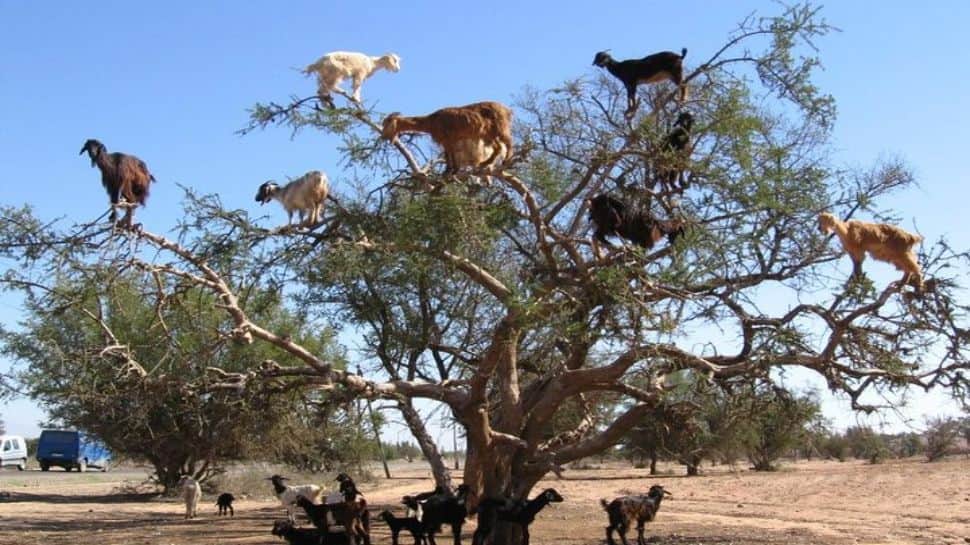
Discover the incredible phenomenon of tree-climbing goats in Morocco, where these animals regularly ascend argan trees to dine on fruits. This acrobatic display, a common sight in the nation’s dry plains, is far more than just a quirky spectacle. It’s a testament to their adaptive survival strategies and an unforeseen contribution to the health and continuity of Morocco’s prized argan forests.
The unique argan trees, native to the Sous Valley, are the goats’ vertical dining halls. They offer small, fig-like fruits with a sweet, succulent interior. During periods of drought, when ground-level food sources diminish, the goats climb these sturdy trees, sometimes reaching heights of eight to ten meters. Their exceptional balance and specialized hooves allow them to navigate the branches effortlessly, accessing this crucial food supply.
Crucially, the goats act as unwitting seed dispersers for the argan trees. Each fruit contains a hard nut, the carrier of the argan seed. As the goats cannot digest these robust nuts, they help spread them through their droppings or by dislodging them from the branches. This unintentional reforestation effort ensures that the seeds are deposited in locations favorable for germination, supporting the growth of new argan trees in the harsh climate and safeguarding the forest’s future.
This relationship is well-understood by local Moroccan farmers. Post-climbing, they collect the undigested nuts from the ground and from beneath the trees. These nuts are then processed to extract the valuable argan oil, a celebrated product that finds its way from Moroccan soil to international markets for both culinary and cosmetic uses.