

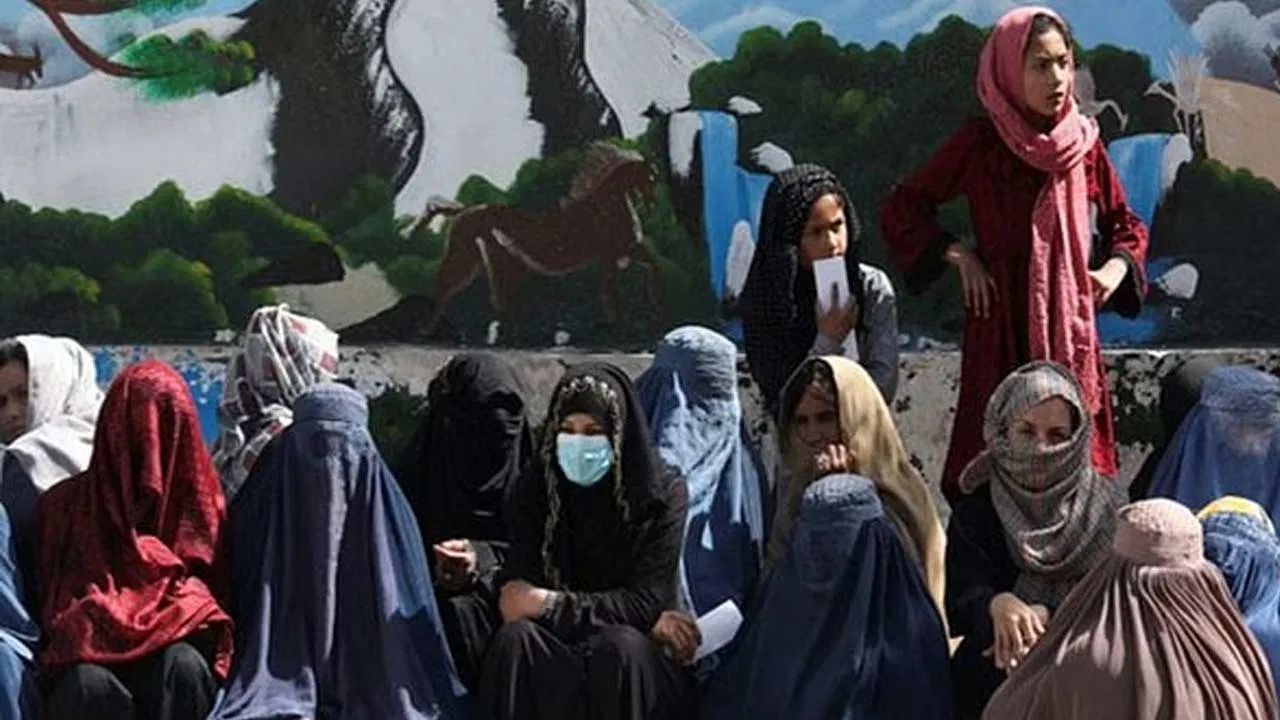
The United Nations’ independent human rights investigator, Richard Bennett, has expressed concern about the brutal treatment of women in Afghanistan under the Taliban. In a report presented to the UN General Assembly, Bennett detailed how the Taliban is using the legal and judicial systems to oppress women and girls, effectively treating them as a tool of control.
Since the Taliban took power in 2021, they have eradicated laws from the 2004 constitution that protected women and girls, particularly those related to violence like rape, child marriage, and forced marriage.
The report also highlighted that the Taliban dismissed all judges from the previous government, including around 270 women. They replaced these judges with people who adhere to strict Islamic views and lack legal training. The replacements make decisions based on Taliban orders. Moreover, the Taliban has gained total control over law enforcement and investigative agencies, removing individuals who had worked with the previous government.
The situation for women and girls has deteriorated since the Taliban took over, and this has been widely condemned. The report states that the Taliban has banned girls from attending school beyond the sixth grade and has restricted women from working. Women are also banned from various public places like parks, gyms, and hair salons. New laws also limit women’s voices and require them to cover their faces. These restrictions have isolated the Taliban internationally, with Russia being the only country to recognize them.
The Taliban defends their actions by claiming they are implementing Islamic Sharia law. However, many scholars and others disagree, stating that the Taliban’s interpretation differs from other Muslim countries and doesn’t follow Islamic teachings that protect women’s legal rights.
Women in Taliban-controlled Afghanistan have no rights. The report points out the absence of women judges, lawyers, or officials in police and other institutions. This leads to underreporting of violence and discrimination against women. The Taliban also mandates that a male relative must accompany a woman to file a complaint, which creates obstacles.
Taliban courts often dismiss complaints filed by women and avoid dealing with cases of divorce, child custody, and gender-based violence. As a result, women are increasingly turning to traditional methods like jirgas and shuras to resolve disputes, as well as seeking help from religious leaders and family elders. However, these systems are male-dominated, so the rights of women and girls are often violated.
Bennett has urged international action to ensure justice, highlighting the importance of international courts. He mentioned the International Criminal Court’s request for arrest warrants on January 23 for two senior Taliban leaders for gender-based persecution of women. He called on all countries to support bringing Afghanistan before the International Court of Justice (ICJ), stating that the Taliban has violated international agreements against discrimination against women.