

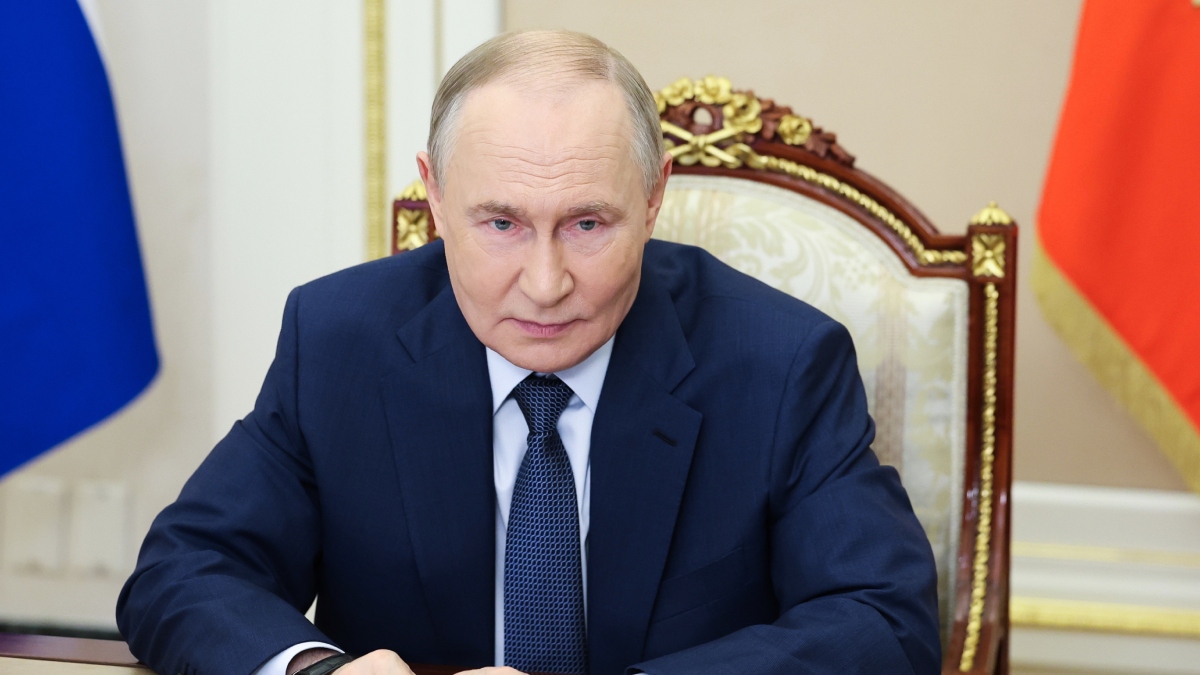
Russia has achieved a significant milestone with the successful test of its nuclear-powered, nuclear-capable underwater drone, ‘Poseidon.’ President Vladimir Putin confirmed the test, highlighting the weapon’s unparalleled performance in speed and depth, making it immune to interception. This development arrives shortly after Russia’s successful testing of the Burevestnik nuclear-powered cruise missile, further demonstrating Moscow’s focus on bolstering its strategic deterrent.
The ‘Poseidon’ drone, also identified by its development name Status-6 and NATO codename Kanyon, is an unmanned underwater vehicle (UUV) engineered for strategic impact. Its reported mission involves the detonation of a high-yield nuclear warhead close to enemy coastlines, potentially triggering a radioactive tsunami that could devastate urban centers and infrastructure. The drone’s propulsion relies on a compact nuclear reactor, providing it with virtually limitless operational range and endurance, allowing it to operate far beyond the reach of conventional defense measures.
Putin underscored the significance of the recent test, which involved the drone operating under its own nuclear power for the first time. He also indicated that its nuclear warhead is more powerful than that of the Sarmat ICBM. The UUV’s ability to operate at extreme depths and its potential to circumvent existing arms control treaties, as noted by defense analysts, position it as a unique and formidable strategic asset in the evolving global security landscape. Plans for its deployment are reportedly in motion, though specifics remain undisclosed.