

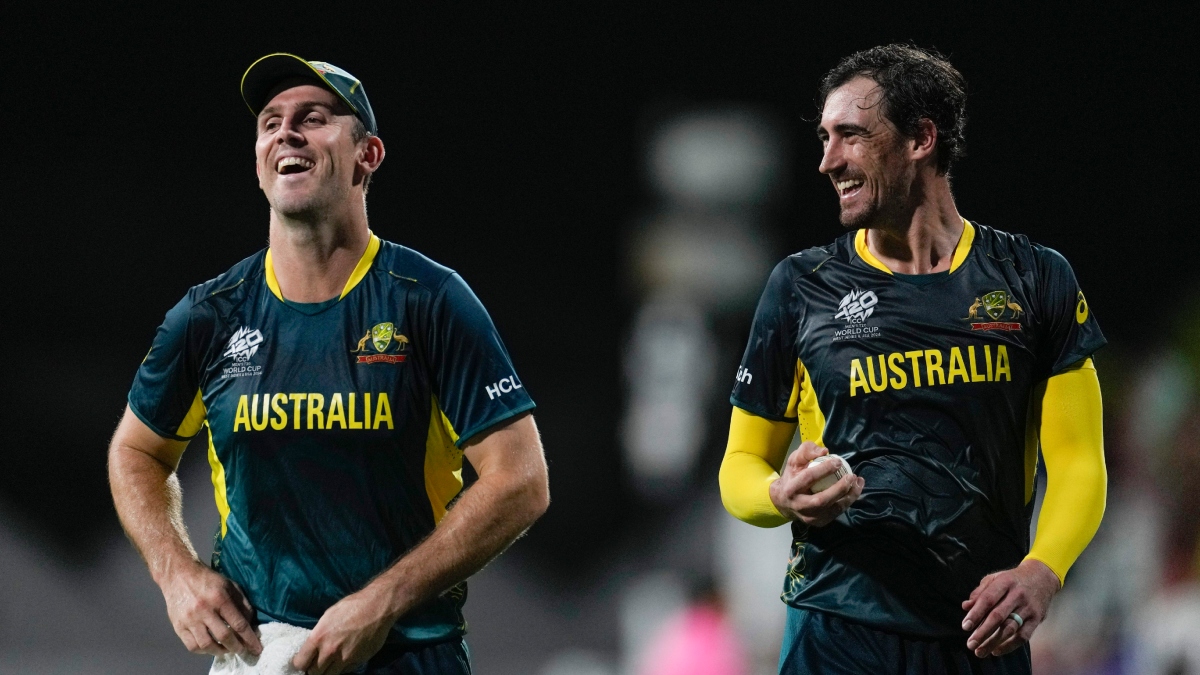
Australia’s T20 international bowling arsenal is undergoing a significant transformation following Mitchell Starc’s retirement from the format, presenting a new challenge as they look towards the 2026 T20 World Cup and upcoming clashes with formidable teams like India. The absence of the veteran paceman leaves a considerable gap in their bowling attack.
The renowned ‘Big Three’ of Mitchell Starc, Josh Hazlewood, and Pat Cummins have been the stalwarts of Australian fast bowling for a considerable period. Starc’s decision to step away from T20Is means the team must now find new leaders for their pace attack.
Starc departs as Australia’s top wicket-taking fast bowler in T20Is, having secured 79 wickets across 65 innings. He is also the second-highest wicket-taker for Australia in the format overall, with Adam Zampa leading the list.
His remarkable consistency in major finals, where he has been a key architect of numerous championship victories, underscores the impact of his departure. Finding a bowler who can replicate Starc’s match-winning performances will be a priority.
A potential replacement, Spencer Johnson, has unfortunately been hampered by injury. The young left-arm pacer, known for his rapid pace, is dealing with a back stress fracture. This setback is expected to keep him out of competitive action until the Big Bash League, impacting Australia’s strategic planning for future series.
Nathan Ellis has emerged as a reliable and effective bowler for Australia in T20Is. With 41 wickets in 27 appearances and an economy rate of 7.84, he has demonstrated his ability to perform consistently. Australia will be counting on Ellis, alongside Hazlewood and Cummins, to form a strong pace unit. Other bowlers such as Ben Dwarshuis, Sean Abbott, and Xavier Bartlett will also play vital roles as the team rebuilds its T20 bowling depth.