

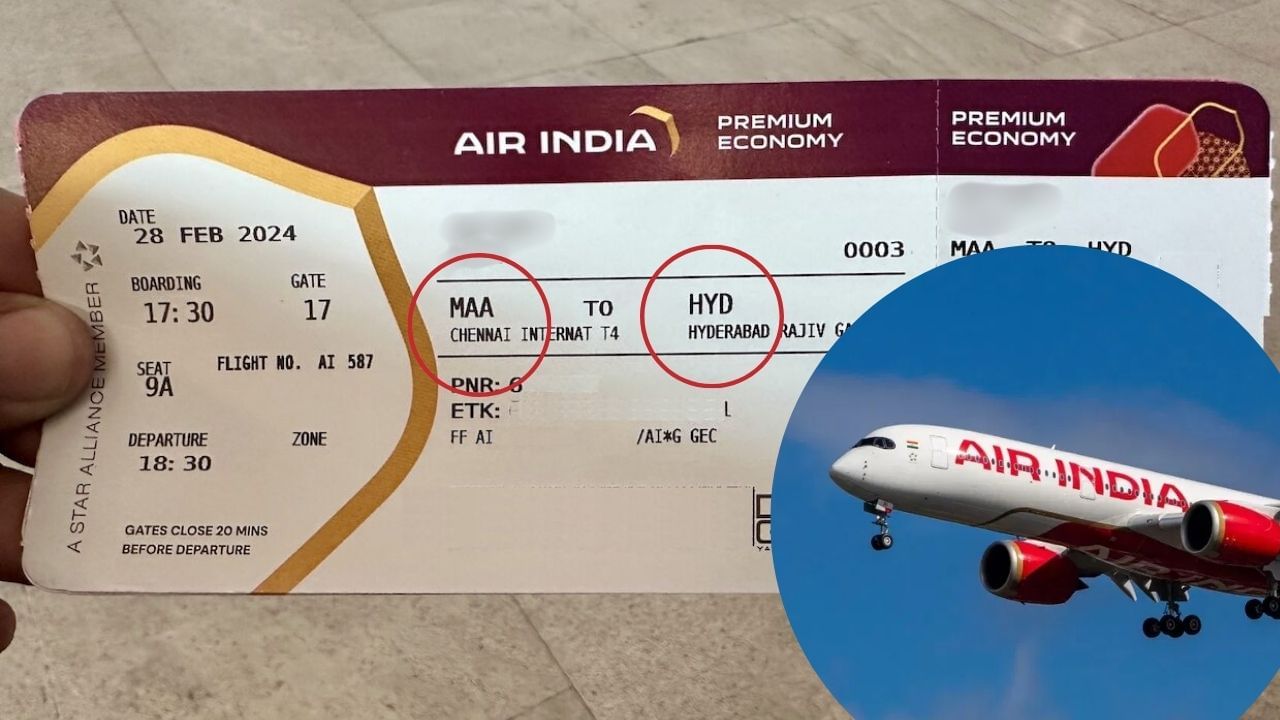
When traveling by plane, travelers encounter airport codes on tickets, such as DEL-BOM, which denotes a flight from Delhi to Mumbai. This article explains these codes and their significance. We’ll explore how and why airport codes are assigned, along with their role in air travel, particularly in light of the upcoming Navi Mumbai International Airport (NMIA) inauguration, which will be identified by the code NMI.
Prime Minister Narendra Modi is expected to inaugurate the first phase of the Navi Mumbai International Airport (NMIA) on September 30th. The government initially aimed to open the airport by January 1, January 31, March 31, and June 2025. The final date was determined during a visit by the Chief Minister and Deputy Chief Minister to the airport site in July.
These codes are essential for the air travel process. They provide a unique identifier for each airport worldwide and are found on tickets, baggage tags, and other travel documents. They also serve as a vital tool for air traffic controllers and pilots.
ICAO and IATA are the organizations responsible for assigning airport codes. IATA issues three-letter codes (e.g., DEL), and ICAO issues four-letter codes (e.g., OEDF for Dammam/King Fahd International Airport). ICAO codes, also known as location indicators, are used in navigation by pilots and air traffic controllers. IATA codes are for airport identification and are often based on the first three letters of the city’s name, such as DELHI for DEL.
Airport codes serve several essential functions: Unique identification of airports globally, use on tickets and boarding passes, and effective communication between pilots and air traffic controllers. These codes also help to maintain international standards and facilitate quick information sharing. These codes save time and effort compared to using entire airport names.
A code-related controversy involved the Gaya airport, which has the code GAY. A BJP MP raised the matter in Parliament, citing that the code was culturally inappropriate. The Minister of State for Civil Aviation explained that IATA codes are permanent and only changed in special cases such as air safety. These codes are generally based on the first three letters of the airport location. IATA rules prevent code changes unless there are extreme circumstances.
Examples of Airport Codes:
Mumbai: BOM (Chhatrapati Shivaji International Airport)
Kolkata: CCU (Netaji Subhas Chandra Bose International Airport)
Chennai: MAA (Chennai International Airport)
Delhi: DEL (Indira Gandhi International Airport)
Bengaluru: BLR (Kempegowda International Airport)
Hydrabad: HYD (Rajiv Gandhi International Airport)
Ahmedabad: AMD (Sardar Vallabhbhai Patel International Airport)
Jaipur: JAI (Jaipur International Airport)
Patna: PAT (Jay Prakash Narayan International Airport)
Srinagar: SXR (Sheikh ul-Alam International Airport)