

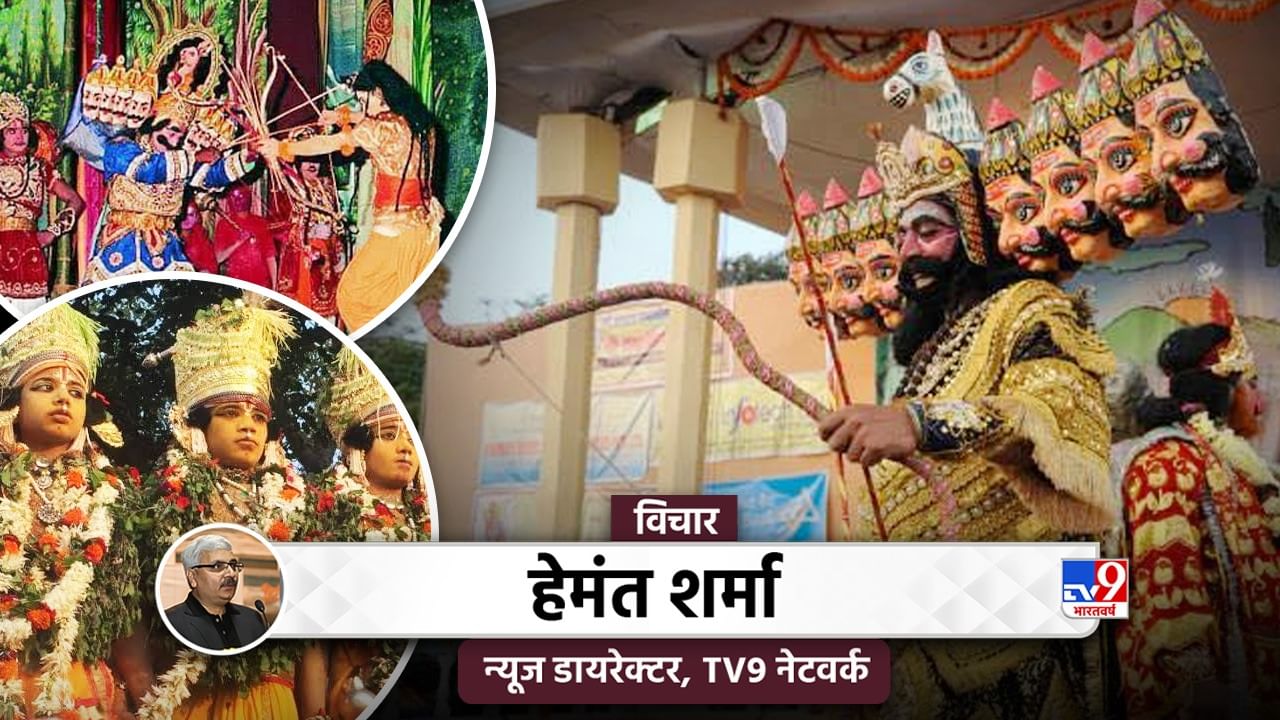
The verse, “Varsha Vigat Sharad Ritu Aai. Lakshman Dekhu Param Suhai,” by Tulsidas, marks the arrival of the Sharad season and the joyful anticipation it brings, accompanied by the echoes of Ramlila. The mind is filled with Ram, and memories surface. Though the demands of modern life limit opportunities for attending, the spirit of Ramlila remains strong. The invaluable tradition of Kashi, with its Ramlilas, possesses an enduring power. Ramlilas persevere despite any circumstance.
The genesis of Ramlila is linked to Ayodhya and Banaras. Ayodhya represents the setting of Ram’s life in the Treta Yuga, while in the 16th century, Tulsidas initiated Ramlila in Banaras to disseminate Ram’s narrative. While the extent to which people understood Ram’s story from the Ramayana and Ramcharitmanas might be debated, Ramlilas in North India undeniably brought the story to every household.
The precise origins of Ramlilas remain uncertain. However, when Goswami Tulsidas depicted Lord Ram’s character in the Awadhi language in Ramcharit Manas in 1500 AD, it led to the widespread staging of Ramlila across North India. Tulsidas faced challenges in marketing the book to the public. Scholars were dissatisfied as Tulsidas was using the language of the people instead of Sanskrit. Without access to modern media, and relying on handwritten copies, Tulsidas adopted Ramlila to propagate his work. He began narrating Ramkatha and performing Ramlilas throughout North India. This method worked. Ramlilas flourished. It is suggested that Tulsidas’s objective was to assure the public that the tyrannical Mughal rule would eventually end, akin to the conclusion of Ravana’s reign.
Megha Bhagat of Banaras is revered as the pioneer of Ramlila. Tulsidas initiated this practice by establishing the Tulsi Akhada and staging the Ramcharitmanas. He sought assistance from his friend, Megha Bhagat. Megha Bhagat taught Sanskrit to children in Varanasi’s Kamachha area. He staged Ramlila based on the Valmiki Ramayana, which was not particularly popular. Tulsidas requested Megha Bhagat to stage Ramlila based on the Manas. Megha Bhagat complied, leading to the growing popularity of Ramlila. Amritlal Nagar incorporated this story in his novel Manas ka Hans, featuring the character of Megha Bhagat.
Megha Bhagat’s devotion inspired Tulsidas. Tulsidas considered him the father of Ramlila in Banaras. Limited details are available about his personal life, except that he was a close friend and devotee of Goswami Tulsidas. The Ramlila that he started still takes place annually, known as the Ramlila of Nati Imli. Krishna Dutt Mishra, author of Gautam Chandrika, referenced Megha Bhagat: “Kamala Ke Megha Bhagat Kari Surdhuni Nahan. Tulsi Charan Pakhari Grih Bhajat Ram Dhanuban.”
Acharya Vishwanath Prasad Mishra noted that a Ramlila in Varanasi is renowned as Ramlila Chitrakoot or Nati Imli Ramlila. Legend suggests that Ramlila was originally performed in Varanasi’s Chitrakoot according to the Valmiki Ramayana, before Megha Bhagat initiated the practice based on Tulsidas’s Ramcharitmanas.