

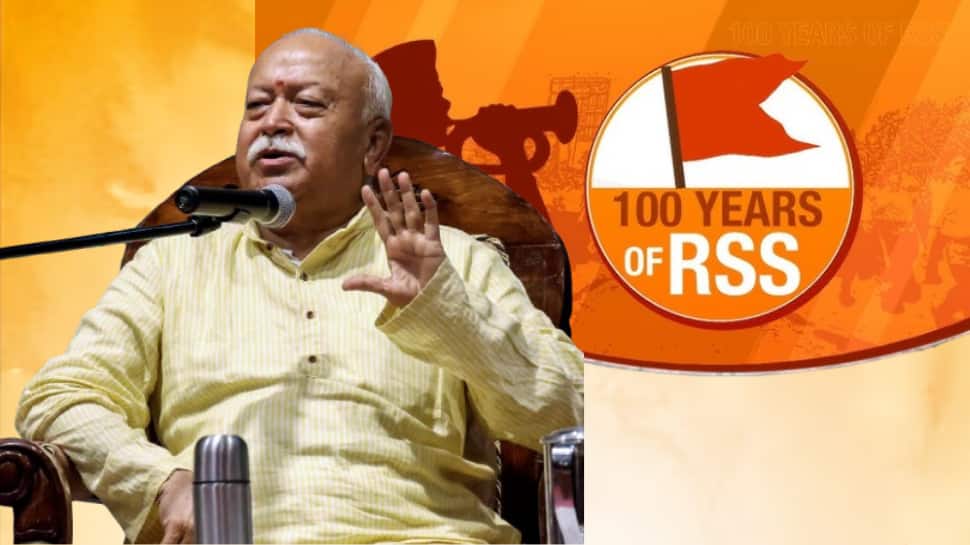
As the Rashtriya Swayamsevak Sangh (RSS) embarks on its centenary celebrations, its chief, Mohan Bhagwat, has articulated a clear message of inclusivity, welcoming individuals from all communities, including Muslims and Christians, into the organization. Bhagwat’s statements were delivered during the inauguration of a lecture series titled ‘100 Years of Sangh Journey: New Horizons,’ held in Bengaluru.
Reflecting on the RSS’s founding in 1925, Bhagwat explained its inception was driven by a critical need for social cohesion and national renewal during a period marked by internal divisions and external threats. He emphasized the historical significance of unity and the enduring contribution of Hindus in safeguarding India’s ancient heritage. Bhagwat also clarified the RSS’s role as a non-political organization focused on societal development and national progress, without any direct political affiliations. He encouraged personal commitment to societal harmony and mutual respect among citizens.
Addressing the common query regarding the RSS’s lack of formal registration, Bhagwat explained that the organization began its work in 1925 under British rule and did not deem registration with the colonial authorities necessary. He highlighted that legal challenges, including three post-independence bans, have consistently been resolved in favor of the RSS by the judiciary, confirming its lawful status. Bhagwat asserted that adherence to the Indian Constitution is paramount and renders formal registration superfluous, similar to many other aspects of societal life.
Bhagwat reiterated that the RSS considers anyone who identifies with ‘Bharat Mata’ as welcome. He clarified that while the Sangh is intrinsically linked to Hindu society, its local gatherings, or ‘shakhas,’ are open to people of all religious backgrounds, including Muslims and Christians, who join with a sense of shared identity. The overarching mission, Bhagwat stated, is to build a strong, organized Hindu society capable of fostering a prosperous and self-sufficient India, and to share the principles of Dharma for global harmony. The completion of this mission, he noted, would signify the end of the Sangh’s dedicated role.