

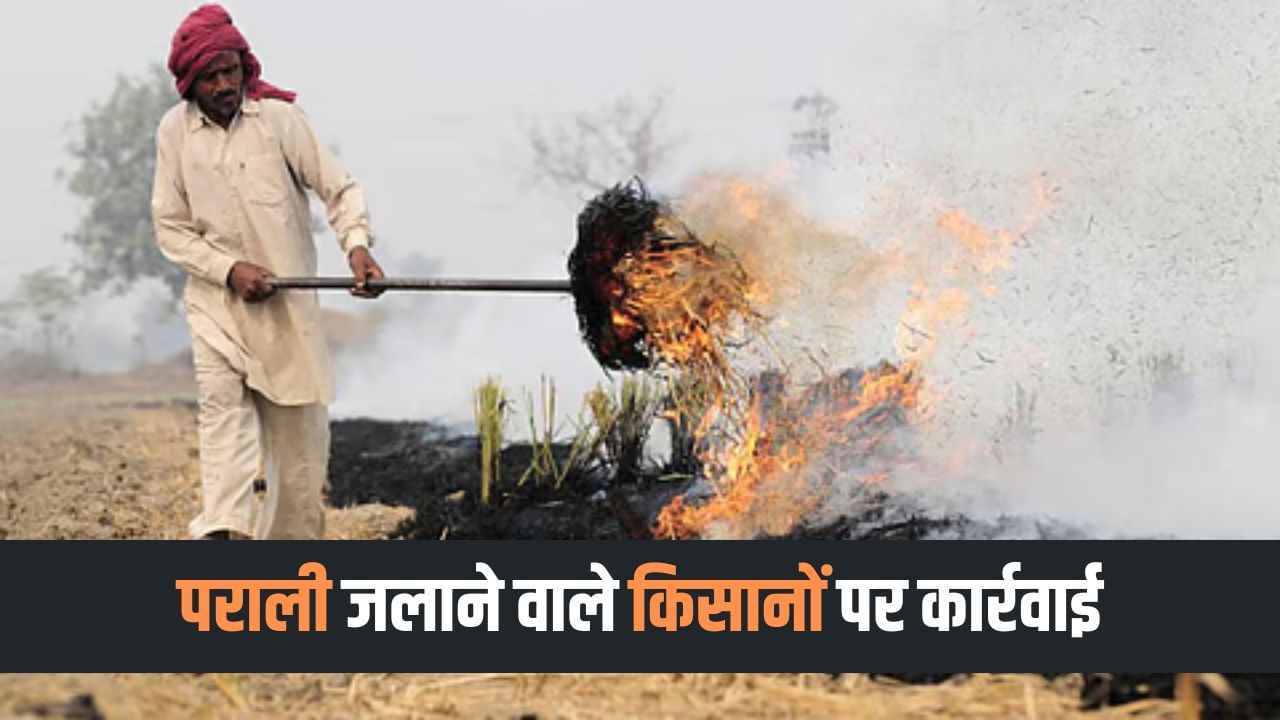
As the autumn season begins in North India, the practice of burning stubble is on the rise again. Farmers often burn crop residue to clear their fields after harvesting. Recognizing the adverse environmental impacts, the Punjab government, along with several other state governments, has imposed a ban on this practice.
On Sunday, Punjab recorded eight new instances of stubble burning. Amritsar has the highest number of cases this year, with 51. In response to 47 incidents, fines totaling ₹225,000 were issued. Additionally, FIRs were filed under Section 223 of the BNS in 49 cases.
Despite the Punjab government’s efforts to prevent stubble burning, cases continue to occur. The cost-effectiveness of this method for farmers makes it a persistent challenge for the authorities.
In 32 cases, a red entry has been made in the land records of farmers who burned stubble. This prevents them from selling their land, mortgaging it, or securing loans against it.
Surveillance of stubble burning is being conducted using satellites. As explained by Control Room Supervisor Yug, satellites use various sensors to detect stubble-burning incidents, and the data is then monitored by officers. The relevant nodal and cluster officers alert the SDM about the incident, after which a team is dispatched to the site to advise farmers against burning stubble.
The ongoing efforts have increased awareness among farmers about the harmful effects of burning stubble, with many now avoiding the practice. Farmers are also informed about the various state government schemes supporting alternatives to stubble burning.