

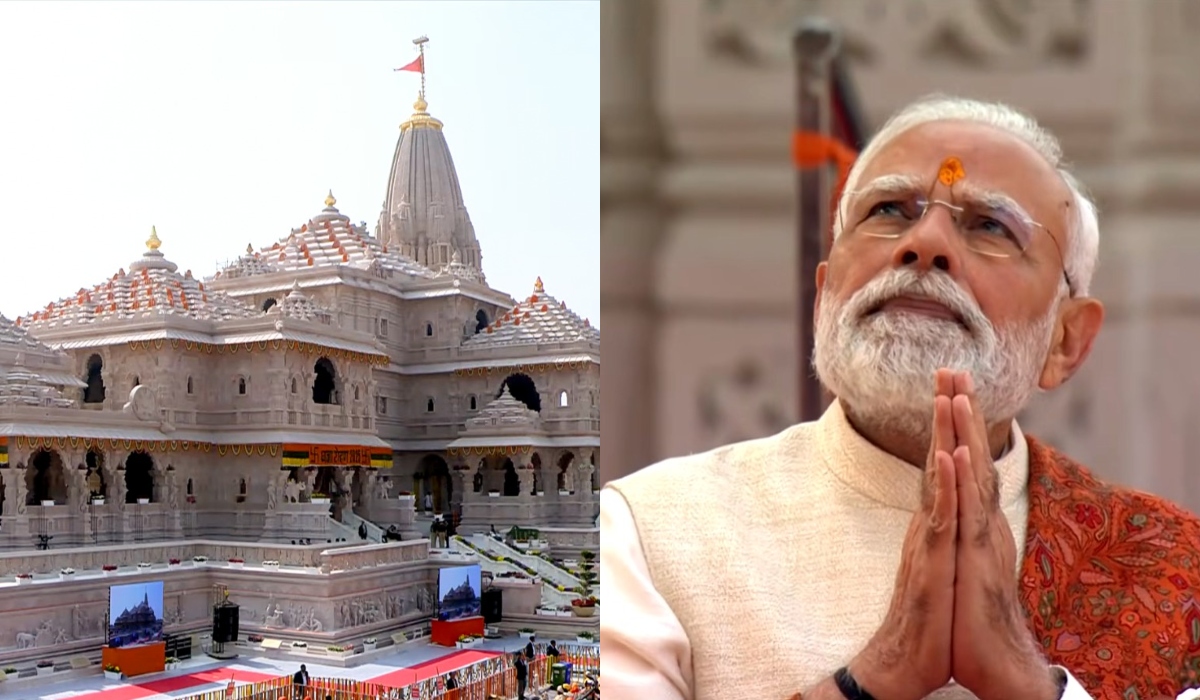
Prime Minister Narendra Modi marked a historic milestone by hoisting a saffron flag atop the Shri Ram Janmabhoomi Mandir in Ayodhya, celebrating the completion of its grand construction. This significant event coincided with Vivah Panchami, commemorating the divine wedding of Lord Ram and Mata Sita, and was attended by RSS Chief Mohan Bhagwat and Uttar Pradesh Chief Minister Yogi Adityanath.
“Centuries-old wounds are healing today,” Prime Minister Modi declared to the assembled crowd, noting the nation’s profound devotion to Lord Ram. He expressed immense satisfaction and gratitude, stating that a 500-year-old resolve of devotees is finally being realized, bringing deep joy.
The impressive saffron flag, measuring 10 feet by 20 feet, is adorned with a sun symbol representing Lord Ram’s valor, the Kovidara tree, and the ‘Om’ symbol. PM Modi emphasized its deep meaning: “This dharma-dhwaj is not just a flag; it signifies the resurgence of Indian civilization. Its design and color embody the glory of Ram Rajya, representing resolve, success, and the fulfillment of dreams held for centuries.”
He explained the flag’s moral significance: “It serves as a perpetual reminder to keep our promises, promoting a duty-bound world and fostering a society free from discrimination, suffering, and fear, thereby ensuring peace and harmony for all.”
The temple complex enhances the spiritual experience with sites like the Sapt Mandir, Mata Shabari temple, and Nishadraj temple, symbolizing love and friendship. The inclusion of statues of Jatayu and a squirrel highlights the principle that even small efforts contribute to significant achievements. Shrines dedicated to revered sages, including Maharshi Valmiki and Saint Tulsidas, further enrich the spiritual offerings.
PM Modi called for Indians to break free from mental bondage and embrace self-reliance. “Lord Ram’s essence is present in every Indian heart. With unified resolve, we can overcome mental limitations and achieve the goal of a developed India by 2047,” he asserted, advocating for a rejection of colonial ideologies.
Ayodhya is rapidly evolving, becoming a model of modern urban development that respects its rich heritage. “The ongoing beautification projects are crafting a city where tradition and modernity seamlessly intertwine, with the Saryu River flowing through a landscape of progress.” The temple has already welcomed over 45 crore devotees, significantly stimulating local economic growth. Ayodhya is emerging as a beacon of sustainable urban planning.
PM Modi characterized the flag hoisting as the conclusion of a 500-year spiritual journey or ‘yajna’. “The healing of ancient wounds and the fulfillment of a 500-year-old aspiration mark the dawn of a new era of cultural celebration and spiritual awakening,” he stated, underscoring India’s enduring heritage and unity.
Reflecting on Lord Ram’s enduring message, PM Modi noted, “Lord Ram connects through devotion, valuing righteousness over lineage, cooperation over power, and virtue over wealth. These are the principles that guide our collective advancement.” Ayodhya is poised to become a global inspiration, merging timeless ethical values with contemporary progress.