

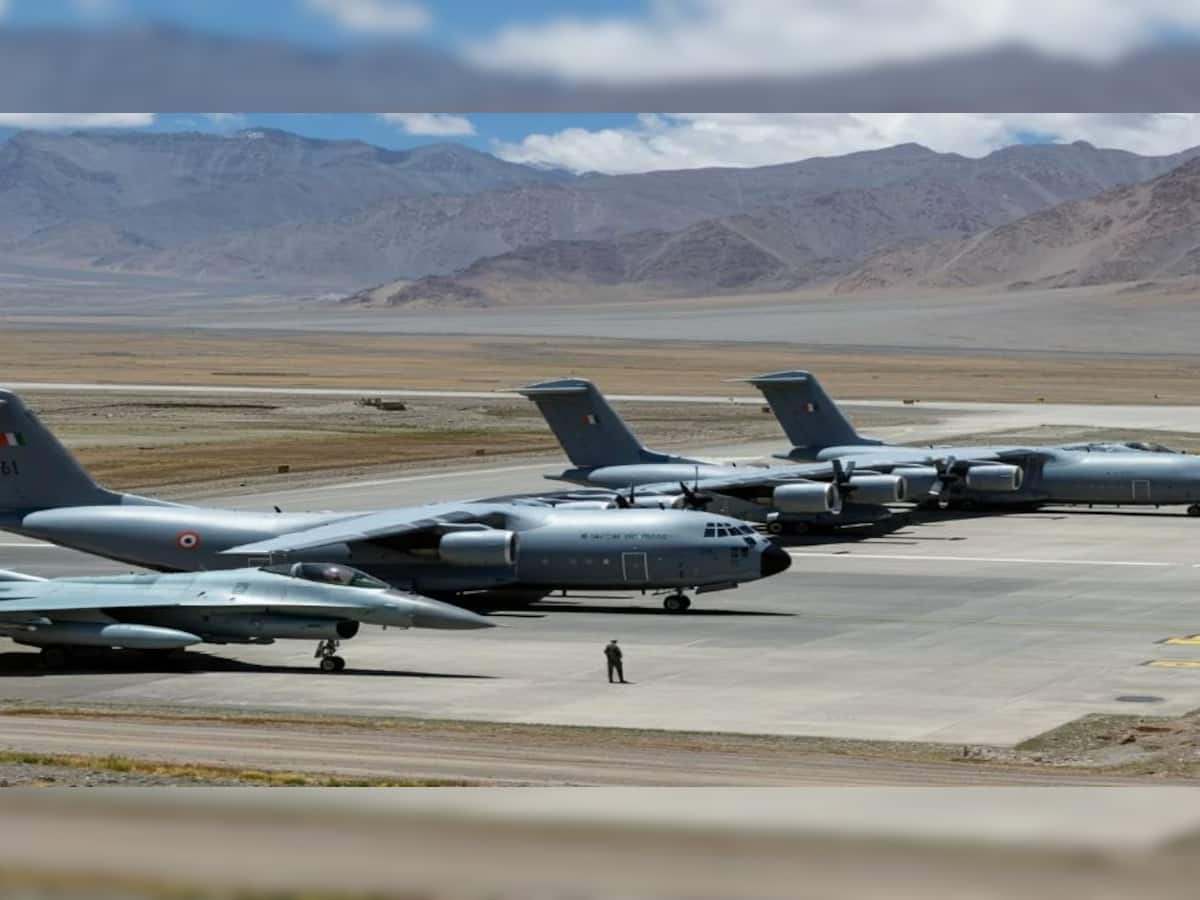
India has officially made its Nyoma Airbase operational, creating the world’s highest airfield at an elevation of 13,700 feet in the rugged eastern Ladakh region. This strategically crucial facility is situated merely 50 kilometers from the Chinese border, significantly enhancing India’s defensive posture and rapid response capabilities in the Himalayas.
Reactivated in 2009 after decades of disuse since its initial construction in 1962, Nyoma Airbase underwent a massive transformation following the 2020 Galwan Valley incident. Recognizing the critical need for high-altitude air superiority, a project was sanctioned in 2021 to convert it into a primary fighter base. The Border Roads Organisation’s Project Himank undertook the ambitious Rs 220 crore upgrade, enduring extreme weather, including blizzards and sub-zero temperatures, to deliver a fully functional airbase.
The airbase now features a 3-kilometer-long paved runway capable of supporting India’s advanced fighter jets like the Sukhoi-30MKI and Rafale. It is also equipped to handle large transport aircraft, such as the C-17 Globemaster III and IL-76, vital for deploying heavy military equipment and personnel. The infrastructure includes hardened aircraft shelters, a modern air traffic control complex, and blast pens built to withstand the region’s harsh environmental conditions and potential threats. Early reports suggest that Sukhoi aircraft have already commenced operations from Nyoma.
Nyoma Airbase serves as a key component of India’s high-altitude air network, complementing existing bases in Leh and Thoise. Its strategic location south of Pangong Tso Lake and near key border points like Demchok and the Depsang Plains ensures enhanced surveillance and allows for swift counter-measures against any hostile actions. It also facilitates crucial logistical support for C-130J Super Hercules aircraft and helicopters that supply troops in incredibly challenging terrain.
Operating at altitudes nearing 14,000 feet presents severe environmental challenges. The thin air requires specialized engineering for aircraft engines and runways. Extreme cold, often reaching -40°C, coupled with heavy snowfall and high winds, makes maintenance and flight operations a constant battle against nature. Precision, endurance, and advanced technology are essential for success in this unforgiving environment.
The operational status of Nyoma Airbase underscores India’s unwavering commitment to its territorial integrity and its capability to project power from the world’s highest operational airfields. It represents a significant advancement in India’s strategic preparedness at the forefront of the Himalayas.