

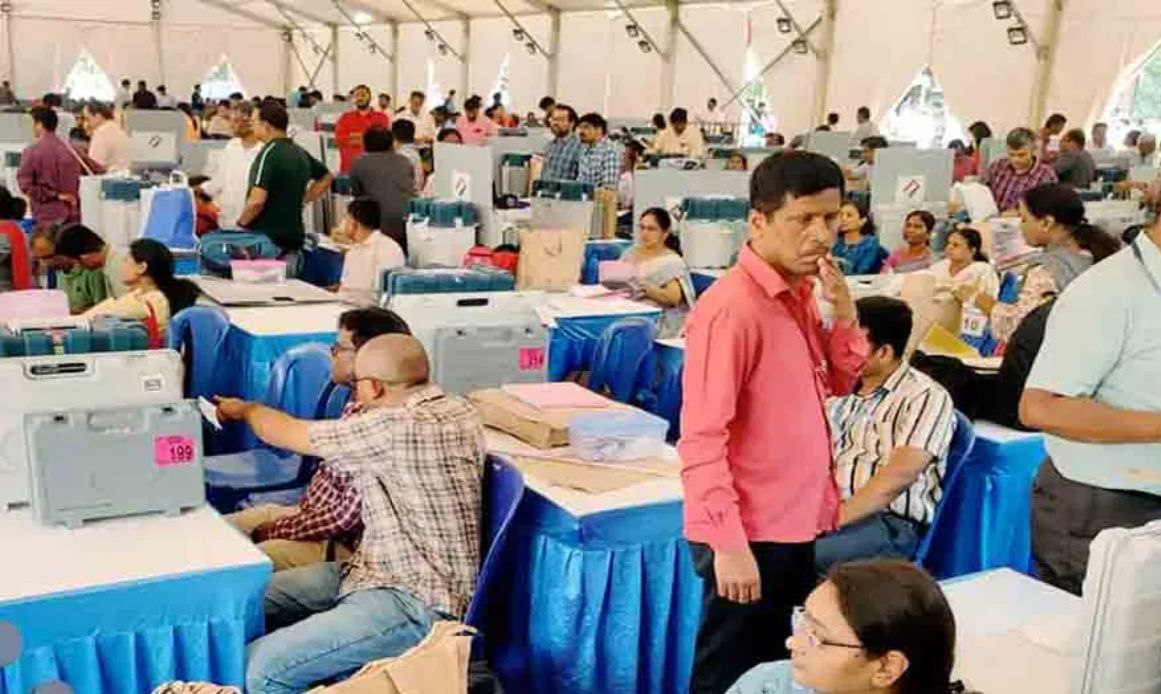
A significant development in Karnataka politics involves the High Court’s decision to order a recount of votes in the Malur assembly seat, impacting the Congress party. The ruling stems from a legal challenge to the 2023 election results, where KY Nanje Gowda of the Congress won with a narrow margin over BJP’s Manjunath Gowda. Manjunath Gowda contested the election results, alleging irregularities in the vote counting.
The petition filed by Manjunath Gowda detailed several concerns regarding the counting process, including the alleged violation of election rules. He claimed that signatures were obtained from counting agents before the EVMs were opened. He sought the court’s intervention to examine all election-related documentation and order a recount. The High Court noted that the absence of required video evidence of the vote counting made verifying the claims difficult.
The court has put its order on hold for a month, allowing Nanje Gowda to pursue an appeal in the Supreme Court. Malur, part of the Kolar district, is one of the 224 constituencies in Karnataka. The political landscape of Malur reveals shifts in party control across different elections.
The political history shows how parties performed in various elections. In 2008, the BJP won. In 2013, the JD(S) had victory. In 2018, the Congress had success. In 2023, the Congress won again. Vote share data indicates the evolving dynamics in the constituency. In 2008, the BJP secured a high vote share. In 2013, JD(S) had the most. In 2018, Congress had a significant vote share. In 2023, there was a very close race between Congress and BJP.
In the 2023 elections, the Congress candidate received 50,955 votes. The BJP candidate got 50,707 votes, and Vijaykumar Hudi, an independent candidate, received 49,362 votes.