

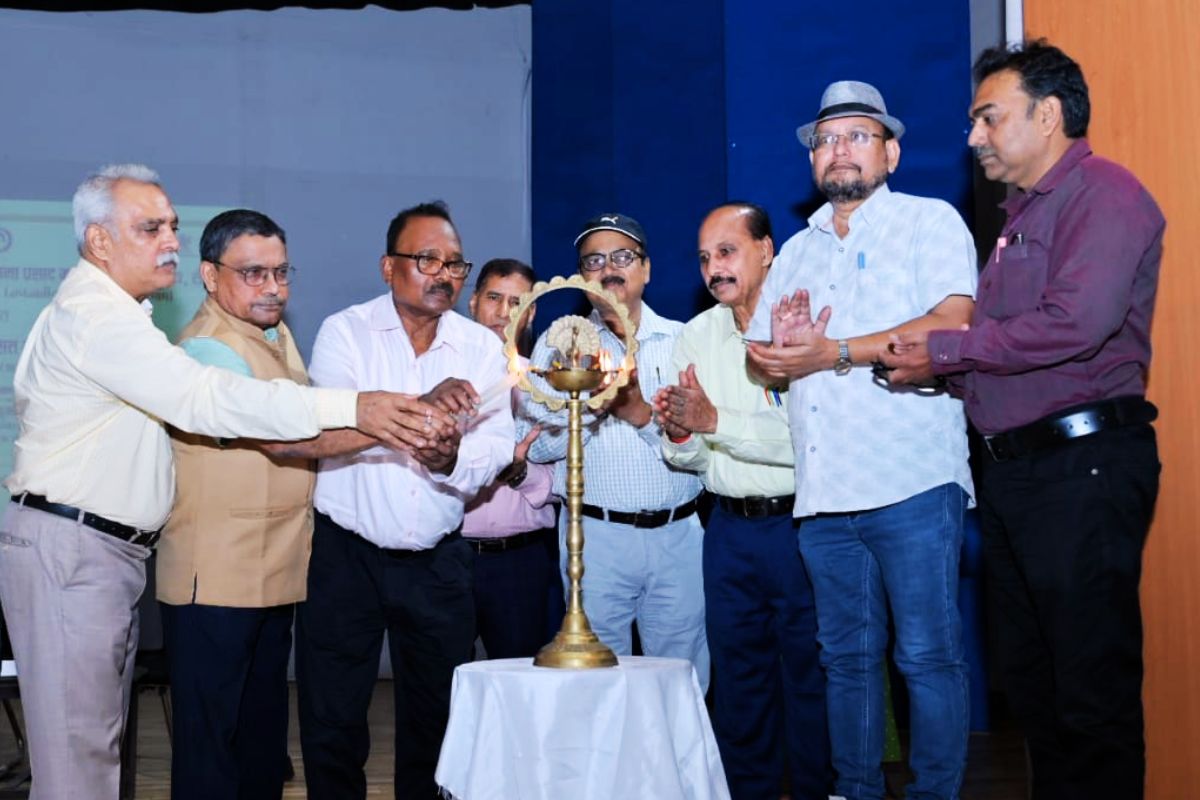
A seminar was held in Ranchi to honor the Santhal Hul, marking the 170th anniversary of the historical tribal uprising of 1855–56. The event, organized by the Indira Gandhi National Centre for the Arts Regional Centre Ranchi and the Department of Tribal and Regional Languages at Dr. Shyama Prasad Mukherjee University, Ranchi, was titled ‘Santhal Hul: Memory of Tribal Resistance and Heritage.’ It drew participation from scholars, researchers, and students, all committed to remembering tribal resistance.
Dr. Kumar Sanjay Jha, the Regional Director of the Indira Gandhi National Centre for the Arts, Ranchi, delivered the welcome address, providing detailed insights into the Santhal Hul. He underscored that the Hul was a powerful symbol of tribal identity, self-respect, and cultural struggle.
Dr. Binod Kumar explored the various interpretations of the word ‘Hul,’ highlighting that the true fight for independence was sparked by the Santhal Hul in 1855. He praised the bravery of Sidho-Kanho, Chand-Bhairav, and Phulo-Jhano and emphasized the need to recognize their historical contributions.
Dr. RK Nirad discussed the importance of ensuring accuracy and authenticity in historical research. He also addressed the significance of critical analysis, particularly for aspiring researchers.
Dr. Dinesh Narayan Verma critiqued colonial narratives, recognizing the Santhal Hul as a spontaneous revolution to protect tribal rights.
Prof. Piyush Kamal Sinha provided a balanced perspective, highlighting the Santhal Hul as the first organized resistance against colonial exploitation.
Sanjay Krishnan discussed how the foundation for the Santhal Hul began in 1853, highlighting the many unsung heroes of the movement.
Prof. SN Munda underscored the importance of the Santhal Hul as a means of preserving the cultural and economic identity of tribal communities, advocating for the protection of cultural heritage and local resources.
The seminar featured additional contributions from Dr. Kamal Bose and Dr. Jai Kishore Mangal. The gathering aimed to highlight the historical, cultural, and socio-political importance of the Santhal Hul, encouraging a re-evaluation of tribal resistance movements within mainstream historical narratives.