

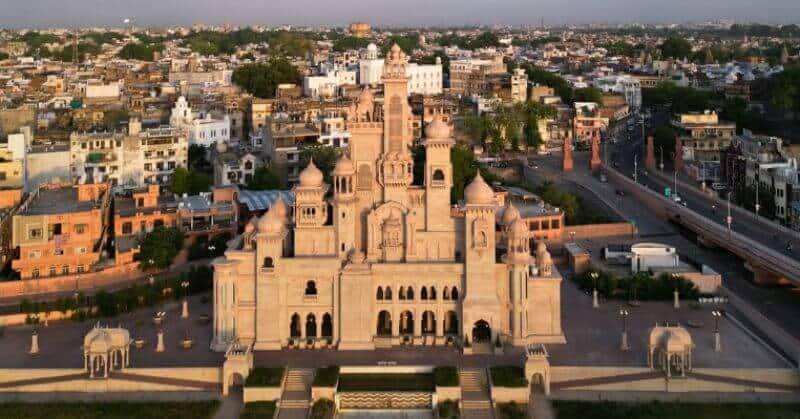
Kota, Rajasthan, celebrated globally as India’s coaching capital, has achieved a unique distinction by becoming the country’s inaugural city to operate entirely without traffic lights. This innovative approach offers a fluid and efficient driving experience for its residents, commuters, and the multitude of students who traverse the city daily, all thanks to smart urban planning and forward-thinking infrastructure.
The Urban Improvement Trust (UIT) of Kota led this ambitious project, driven by the objective of continuous traffic flow. By developing a complex web of interconnected ring roads, vehicles are now able to bypass traditional, time-consuming intersections. This strategic rerouting has significantly reduced travel durations and optimized the overall efficiency of the city’s road network.
To further facilitate this seamless movement, the city has constructed over twenty-five flyovers and underpasses at its most critical junctions. These elevated and subterranean structures ensure that vehicles can maintain their speed, eliminating the delays inherent in stopping at traffic signals.
The positive ramifications are evident: commutes are noticeably quicker, enhancing daily life for all road users. Furthermore, the smoother traffic patterns have led to a reduction in vehicular accidents and a decrease in fuel consumption, promoting both a more pleasant and an environmentally responsible mode of transportation.
Kota’s pioneering venture now serves as a compelling example for urban planners in other Indian cities struggling with traffic gridlock. It stands as a testament to how strategic urban design and infrastructure development can create a superior traffic management system that prioritizes safety and efficiency over conventional signalization.
Even with a dense population of residents and thousands of students navigating the city daily, Kota has engineered a traffic ecosystem where stoppages are virtually nonexistent. This remarkable achievement highlights the potential of intelligent planning to transform a signal-dependent city into a model of uninterrupted urban mobility, forging a new path for city infrastructure in India.