

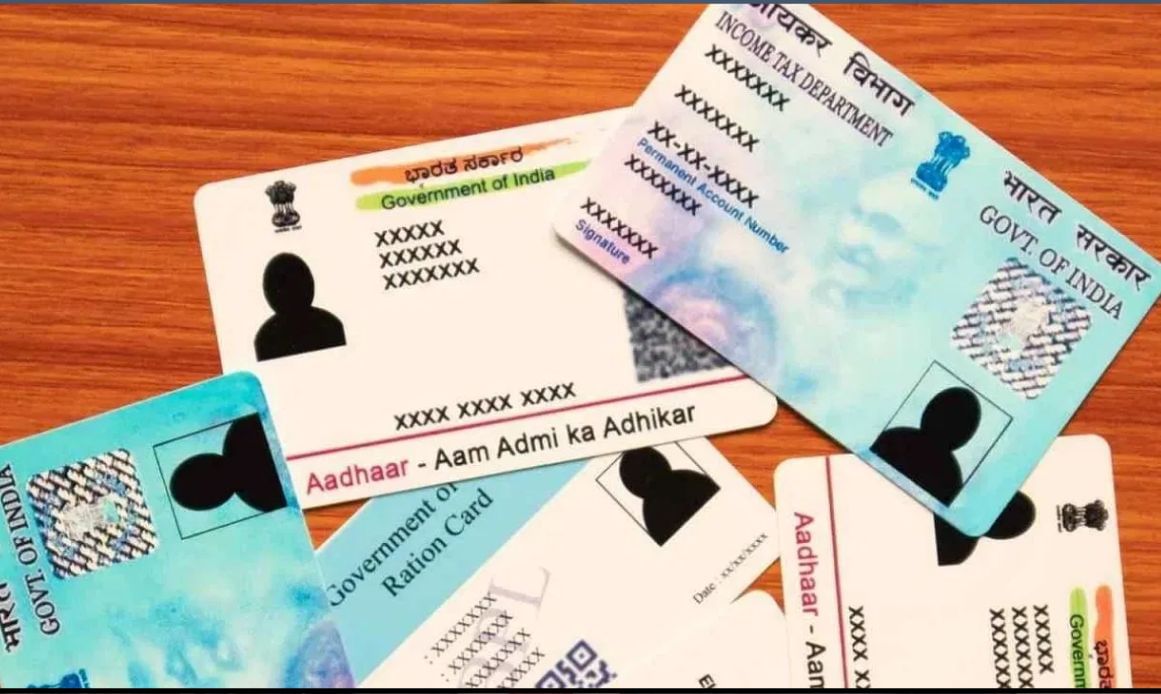
The Bombay High Court has ruled on the matter of proving Indian citizenship, clarifying that possessing an Aadhaar card, PAN card, and Voter ID is insufficient in itself. The court’s decision emphasizes that these documents are primarily for identification and service access, and do not automatically confer citizenship as defined by the law.
The case involved a Thane resident who presented documentation including an Aadhaar card, PAN card, passport, and Voter ID, all linked to various official records. The court’s ruling underlines that these do not definitively establish citizenship.
The ruling was made within the context of a specific case, where police suspected the individual of being a Bangladeshi citizen residing in Thane since 2013. This has led to a detailed look at what constitutes acceptable proof of Indian citizenship.
**Required Documentation for Citizenship:**
* **Birth Certificate:** This is a vital document issued after birth, containing details of the birthplace. It serves as primary and valid proof of citizenship, as per the Registration of Births and Deaths Act, 1969.
* **10th and 12th Certificates:** These are also regarded as valid proof of citizenship.
* **Domicile Certificate:** Issued by the state government, confirming residency within a specific state, supporting citizenship claims.
Furthermore, documents such as land allotment certificates or pension orders issued by the government, especially those issued before 1987, can also be presented as evidence of citizenship.
**Instances Where Identity Documents Are Not Sufficient:**
The court has made it clear that in situations involving allegations of foreign origin or the use of fraudulent documents, the court cannot rely solely on identity documents to determine citizenship. A detailed examination under the Citizenship Act, 1955, is required.
**Acquiring Indian Citizenship:**
There are four ways to obtain Indian citizenship:
1. **Citizenship by Birth:**
* Anyone born in India between January 26, 1950, and July 1, 1987, automatically qualifies as an Indian citizen, regardless of their parents’ citizenship.
* Individuals born in India between July 1, 1987, and December 3, 2004, are citizens if either parent was an Indian citizen at the time of their birth.
* Those born in India after December 3, 2004, are citizens if either parent is an Indian citizen and the other is not an illegal immigrant.
2. **Citizenship by Descent:** Available to individuals born outside of India to an Indian citizen parent.
3. **Citizenship by Registration:** Available for those of Indian origin residing in India for at least seven years. Also, those married to Indian citizens who have lived in India for at least seven years may apply.
4. **Citizenship by Naturalization:** Those who have resided in India for 12 years and meet the requirements of the Third Schedule of the Citizenship Act, 1955, are eligible to apply.