

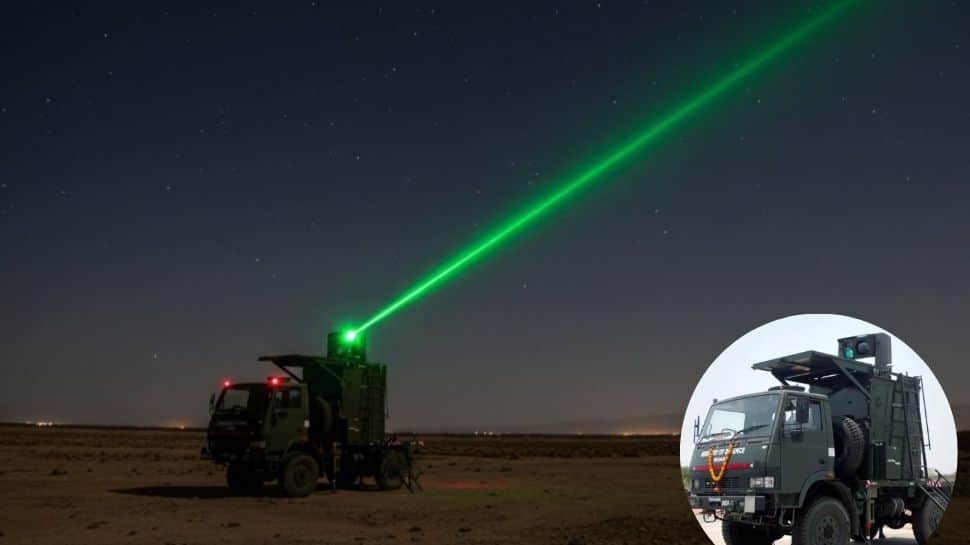
India is making a formidable entry into the advanced laser weapons market, poised to neutralize enemy drones with unprecedented efficiency. The Indian Army and Air Force are preparing for the deployment of 16 indigenous systems specifically designed for detecting and eliminating unmanned aerial vehicles (UAVs). These state-of-the-art systems employ powerful laser beams to destroy drones from a distance of 2 kilometers, offering a critical advantage in aerial defense.
The Defence Ministry is expected to soon approve DRDO’s Integrated Drone Detection and Interdiction System (Mark 2). This system features a robust 10-kilowatt laser, effectively doubling the engagement range to 2 kilometers over its predecessor. This enhancement is a direct response to the evolving threat landscape, including the sophisticated drone swarm tactics observed in past operations. India is bolstering its capabilities to ensure it can effectively counter such threats.
DRDO’s advancements continue with a 30-kilowatt ‘direct energy weapon’ system currently in trials, which has demonstrated the ability to neutralize targets at an impressive 5 kilometers. This future technology aims to create a comprehensive safety zone around sensitive areas.
India has solidified its position among the world’s leading military powers by successfully demonstrating laser-based interception of aircraft, missiles, and drone swarms. This achievement places India in the company of the United States, China, and Russia in developing and deploying such advanced technology.
The increasing prevalence and sophistication of drones in modern conflict underscore the necessity of advanced counter-drone measures. India’s strategic deployment of these laser systems is paramount for securing its borders, military installations, and other vital strategic locations.
The vision for India’s defense is expansive, with DRDO working on a full suite of directed energy weapons, including high-energy microwaves and electromagnetic pulses. This comprehensive approach aims to equip India with cutting-edge ‘Star Wars’ level capabilities to address future aerial threats.