

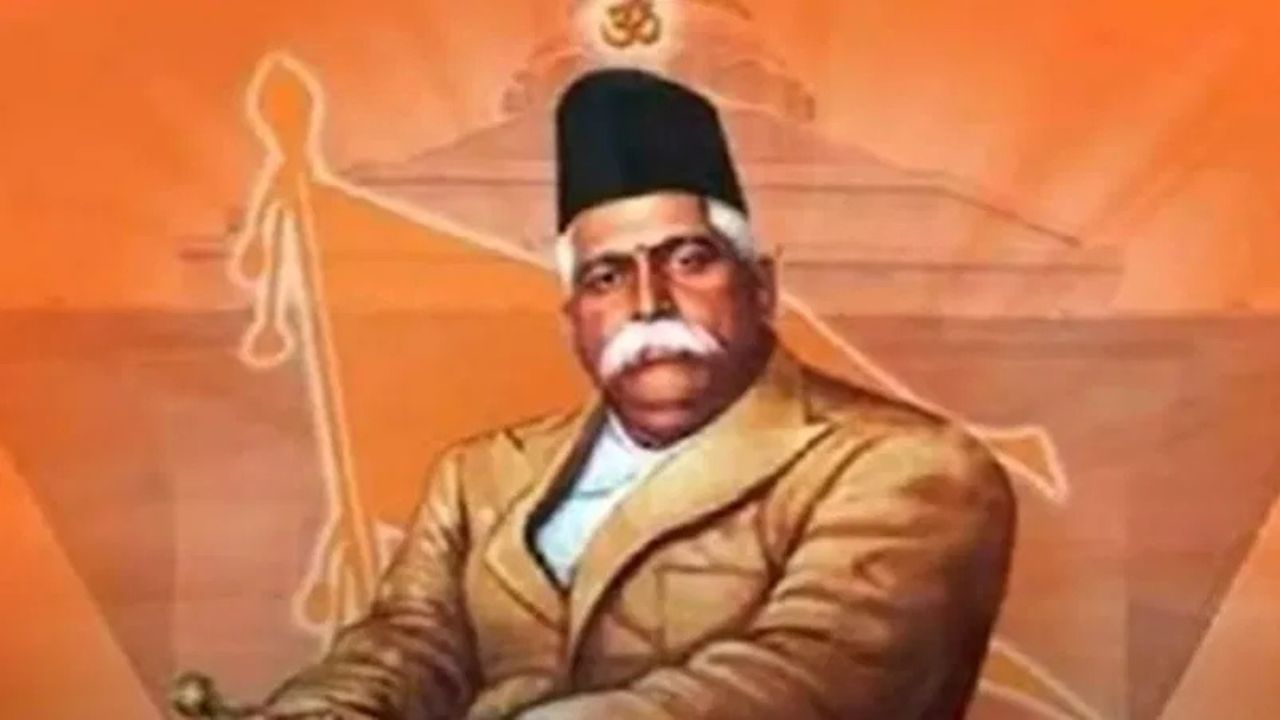
The Rashtriya Swayamsevak Sangh (RSS), recently marking its centenary, organized a three-day lecture series in Delhi, prompting a reevaluation of its historical role in India’s struggle for independence. Despite claims that the RSS had a minimal impact, evidence reveals the organization’s active participation in movements against British rule. Dr. Keshav Baliram Hedgewar, the RSS founder, displayed vocal opposition to the British from a young age, while the RSS itself was involved in the Civil Disobedience and Quit India movements.
As an eight-year-old, Hedgewar refused sweets distributed at Queen Victoria’s Diamond Jubilee in 1897. He was later expelled from school for singing ‘Vande Mataram’ in 1907, defying a British ban.
His involvement extended to revolutionary groups. During his medical studies, Hedgewar joined the Anushilan Samiti, a prominent revolutionary organization in Bengal. In 1915, during World War I, he played a key role in organizing a revolt, with Ras Bihari Bose and Sachindra Nath Sanyal coordinating a nationwide uprising in military cantonments.
Initially, Dr. Hedgewar was connected with the Congress. In 1920, he and Dr. B.S. Hardikar managed the arrangements for the Congress session in Nagpur, recruiting about 1,200 volunteers. He served as the Joint Secretary of the Nagpur Congress and a member of the reception committee.
After the Congress session, Hedgewar emerged as a leader. He was appointed to the Tilak Swaraj Fund Committee in April 1921 and elected to the District Congress in May 1921. His role in the Non-Cooperation Movement increased his prominence.
Dr. Hedgewar opposed British directives. In 1921, he declared that no liquor shops would operate in Nagpur, leading to a ban on public gatherings. He was imprisoned for a year and returned to the national movement in 1922.
In 1923, he trained volunteers for the Jhanda Satyagraha in Nagpur, forming the Wardha Parishad with others to organize the RSS in the freedom struggle. In 1924, Hedgewar used the press to advocate for complete freedom, becoming a prominent editor. He founded the RSS in 1925.
By 1926-27, the RSS had expanded. Revolutionary Rajguru became an RSS volunteer. Bhagat Singh met Dr. Hedgewar in Nagpur. After the assassination of a police officer, revolutionaries were helped to escape.
RSS volunteers led protests during the Simon Commission’s visit in 1927. Vithalbhai Patel was the chief guest at Vijayadashami in 1928. A training camp on Swaraj was held in Wardha in 1929.
Dr. Hedgewar stated that India had to achieve freedom through its own efforts.
The Congress declared complete independence in 1929 and called for Independence Day on January 26, 1930. Dr. Hedgewar supported this, instructing RSS branches to hoist the flag and hold lectures on freedom. Independence Day was celebrated in all RSS branches.
In 1930, Gandhi launched the Civil Disobedience Movement, which the Sangh supported. In 1930, Dr. Hedgewar led a Satyagraha.
On August 8, 1931, several volunteers were injured during a procession. During Vijayadashami, Dr. Hedgewar was in jail, and a message was read in the RSS branches that the pursuit of comfort would be ceased until India achieved independence.
As the Sangh’s role in the freedom movement grew, the government took action. On December 15, 1932, the government prohibited its employees from joining the RSS. Protests followed.
In 1934, a government attempt to ban RSS members was opposed, leading to a debate that lasted three days, increasing the Sangh’s popularity.
The revolutionary spirit of Dr. Hedgewar inspired the Mukteshwar Dal to merge into the RSS, resulting in the establishment of new branches.
Dr. Hedgewar’s ideals influenced numerous national leaders. His ability to communicate the Sangh’s perspective gained him respect.
A training camp was held on December 22, 1934, with 1,500 volunteers. The RSS became a topic of discussion due to Mahatma Gandhi’s visit. The volunteers welcomed Gandhi.
During the Faizpur Congress session in 1936, an RSS volunteer hoisted the flag, but the honor was withdrawn when his affiliation was revealed. Dr. Hedgewar honored him and advised him to remove obstacles for the nation.
In December 1937, Dr. Hedgewar introduced Veer Savarkar to the RSS, who was warmly welcomed. Savarkar was deeply moved by the volunteers’ dedication.
In 1939, Subhash Chandra Bose formed the Forward Bloc. Bose was later expelled from the Congress.
In early 1940, a veteran Bengali revolutionary toured to organize revolutionaries, meeting Dr. Hedgewar, who embraced him. The revolutionary sought the Sangh’s organizational strength for the revolution.
In June 1940, Subhash Chandra Bose met Dr. Hedgewar, who then entrusted the leadership to M.S. Golwalkar. Dr. Hedgewar died in June 1940.
In 1942, the Congress launched the Quit India movement. The RSS volunteers were actively involved.
The Asti-Chimur rebellion saw many volunteers jailed. The movement spread, and the news of the Chimur rebellion was broadcast on Berlin Radio. RSS volunteer Balaji Rajapurkar was martyred.
The Sangh was active in the Quit India movement. British intelligence reports indicate the RSS worked to achieve independence.