

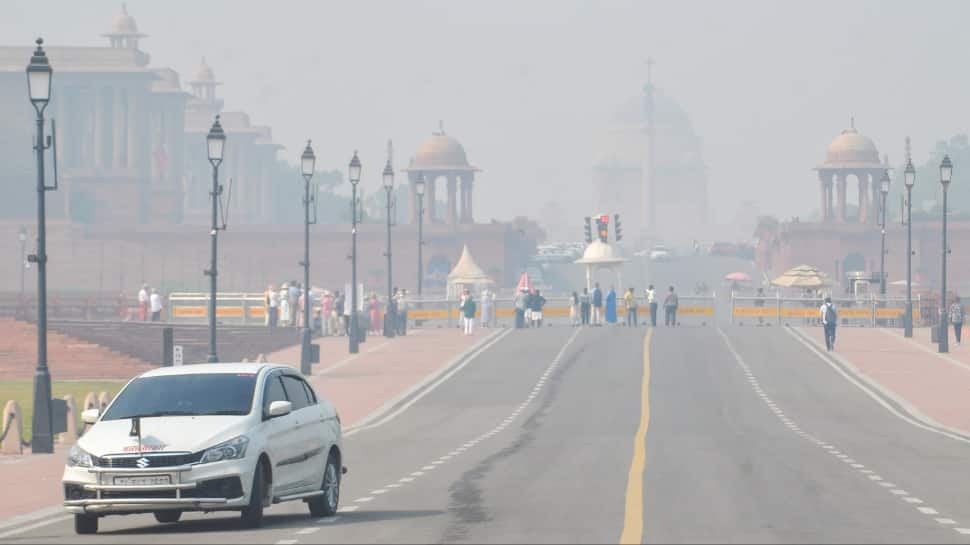
The air quality in Delhi has officially entered the ‘severe’ zone, reaching an AQI of 428 on Tuesday, marking the season’s first such episode and causing considerable distress to residents with respiratory issues and burning eyes. This alarming pollution spike has led authorities to implement GRAP Stage III, the most stringent phase of the Graded Response Action Plan, across the National Capital Region (NCR).
The Central Pollution Control Board (CPCB) recorded the 24-hour AQI at 428 by late afternoon, indicating a significant and immediate threat to public health. In response, the Commission for Air Quality Management (CAQM) has rolled out emergency measures under GRAP Stage III to mitigate further air quality deterioration.
These emergency measures include a comprehensive ban on all construction and demolition activities not deemed essential within Delhi-NCR. Stricter traffic regulations are also in effect, prohibiting the use of BS-III petrol and BS-IV diesel four-wheelers in Delhi and adjacent NCR districts. Furthermore, to limit children’s exposure to toxic air, primary schools (up to Class V) have been directed to switch to remote or hybrid learning.
Unfavorable weather conditions are largely responsible for the current air pollution crisis. Atmospheric inversion, caused by a combination of low temperatures and calm winds, has trapped pollutants near the ground. This phenomenon has drastically reduced visibility, which plummeted to 600 meters at Safdarjung in the early morning hours. While a slight increase in wind speed on Wednesday offers a glimmer of hope for an AQI shift to ‘very poor’, experts anticipate the air quality to remain in this range until at least Friday. The situation highlights the critical need for immediate, coordinated actions to curb emissions from all sources, including local industries and regional stubble burning.