

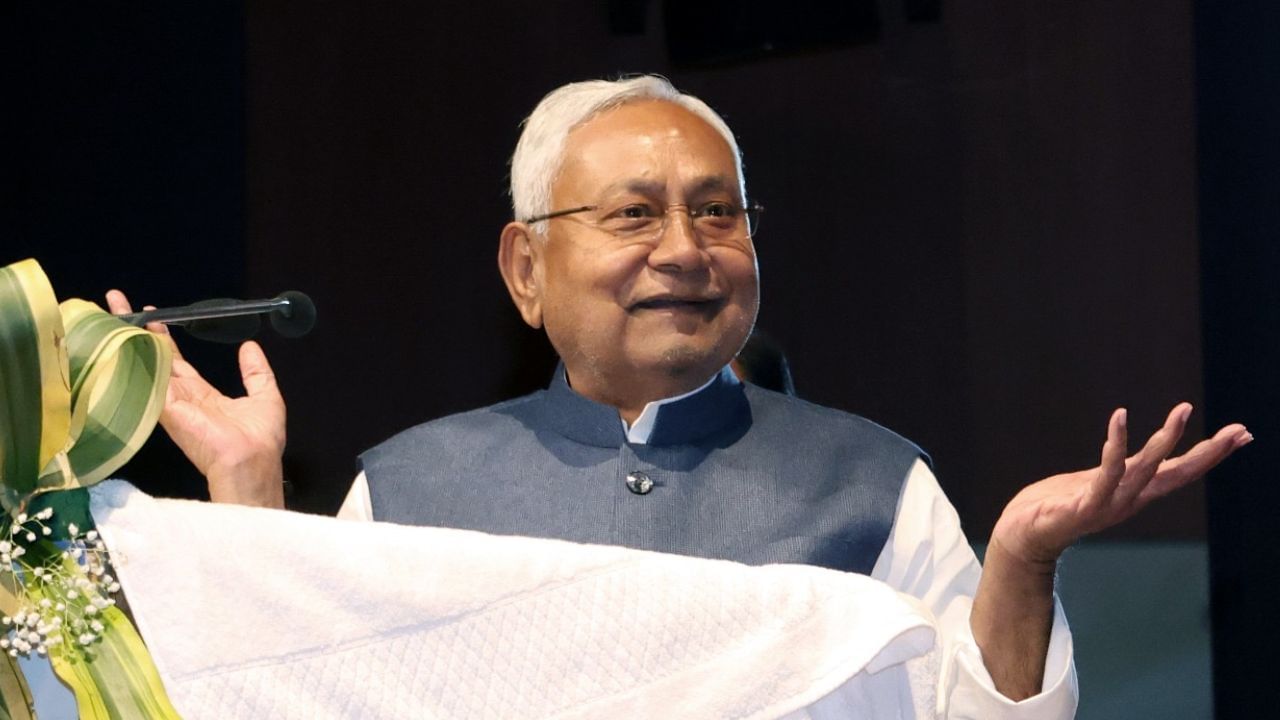
Chief Minister Nitish Kumar recently inspected the development work in the Barabar (Vawanwar) area of Jehanabad district, providing guidance to the authorities. During the visit, he acknowledged the pilgrims attending the Vawanwar Shravani Mela. The Baba Siddheshwarnath Mahadev Temple on Vawanwar Hill witnesses a large gathering of devotees during the Shravan month.
Kumar assessed the management of the Shravani Mela and instructed the District Magistrate to ensure the comfort and convenience of the devotees during their visit. He also addressed the concerns of the local residents and directed the District Magistrate to resolve them.
The Barabar Caves are a remarkable representation of India’s ancient cultural legacy. Located in Jehanabad, these caves are among the oldest rock-cut structures in the Indian subcontinent. Constructed during the rule of the Mauryan emperors Ashoka and his successor Dasharatha in the third century BCE, these caves served as residences for the monks of the Ajivika sect, an influential religious group at the time.
The Barabar Hill houses four main caves, including Karna Chaupar, Lomas Rishi, Sudama, and Vishwajyoti. The Sudama and Lomas Rishi caves are particularly notable for their architectural design. The entrance of the Lomas Rishi Cave, built in the stupa and chaitya styles, influenced later Buddhist architecture. A key feature of these caves is their exquisitely polished interior, a prime example of the Mauryan stone polishing technique. This technique gives the walls a mirror-like appearance and excellent acoustics, making the caves ideal for meditation.
The Barabar Caves not only symbolize India’s rich cultural heritage but also demonstrate the architectural achievements of the Mauryan period. This site remains a significant destination for enthusiasts of history, art, religion, and architecture.