

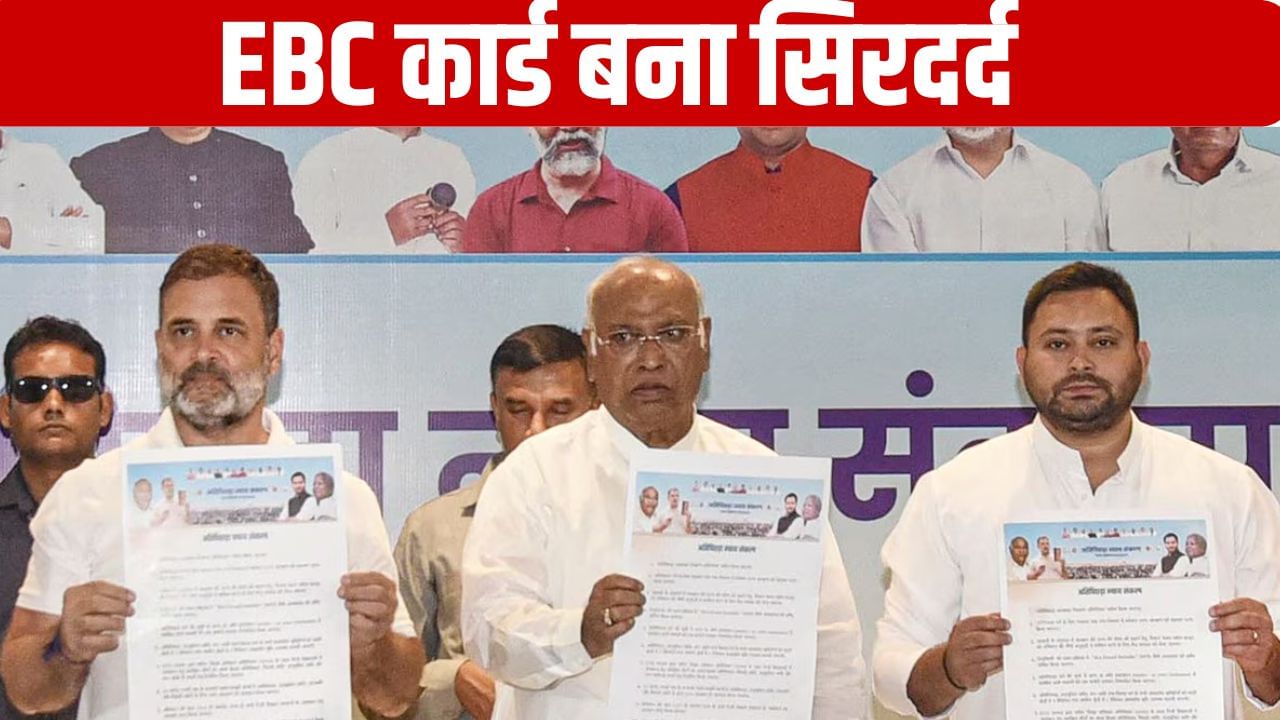
With the upcoming Bihar elections as the backdrop, Rahul and Tejashwi, along with leaders from the Mahagathbandhan, unveiled the Atipichda Nyay Sankalp, which focuses on the Extremely Backward Classes. The Sankalp comprised a 10-point agenda. However, this very agenda might become a stumbling block when it comes to seat distribution. As per reports, Mukesh Sahni, Pashupati Paras, and the left-leaning parties have made their intentions clear to the Congress-RJD that Nitish Kumar has already successfully cultivated this particular vote bank. Therefore, to effectively make inroads into the 36% EBC vote bank in Bihar, they believe that the distribution of seats and the selection of candidates should be reflective of their share.
Furthermore, similar concerns are being voiced within the Congress and RJD, who feel that Nitish has already achieved what he set out to do to secure this vote bank. At this point, the Mahagathbandhan has only made declarations. To exhibit genuine commitment towards this vote bank, the alliance needs to demonstrate a commitment towards seat allocation and candidate selection, which is essential if they are hoping to make an impact. It seems that the EBC card played by the Congress-RJD could prove to be a cause of internal conflict before the seat distribution is even finalized.
What are the Key Tenets of the Atipichda Nyay Sankalp?
Rahul and Tejashwi, along with other Mahagathbandhan leaders, have outlined the ten main points of the Atipichda Nyay Sankalp. The pledge includes sending a law to include the 50% reservation limit in the 9th schedule to increase reservation. It also involves increasing reservation in Panchayat-city bodies from 20% to 30%. Furthermore, reservation will be implemented in all private colleges and universities.
The “Not Found Suitable” system in appointments will be removed. A committee will be established to ensure accurate representation within the Extremely Backward Classes. Land will be provided to the landless residents of SC/ST/OBC/EBC categories. They will be allocated 3 decimal land in urban areas and 5 decimals in rural areas. Half of the reserved seats in private schools will be allocated to children from the SC/ST/OBC/EBC communities. Additionally, a 50% reservation will be implemented for SC/ST/OBC/EBC in government contracts valued up to Rs 25 crore. Finally, a law will be created to prevent atrocities against the Extremely Backward Classes. An authority will be established to oversee reservations, and the power to make changes to the list will reside solely with the assembly.