

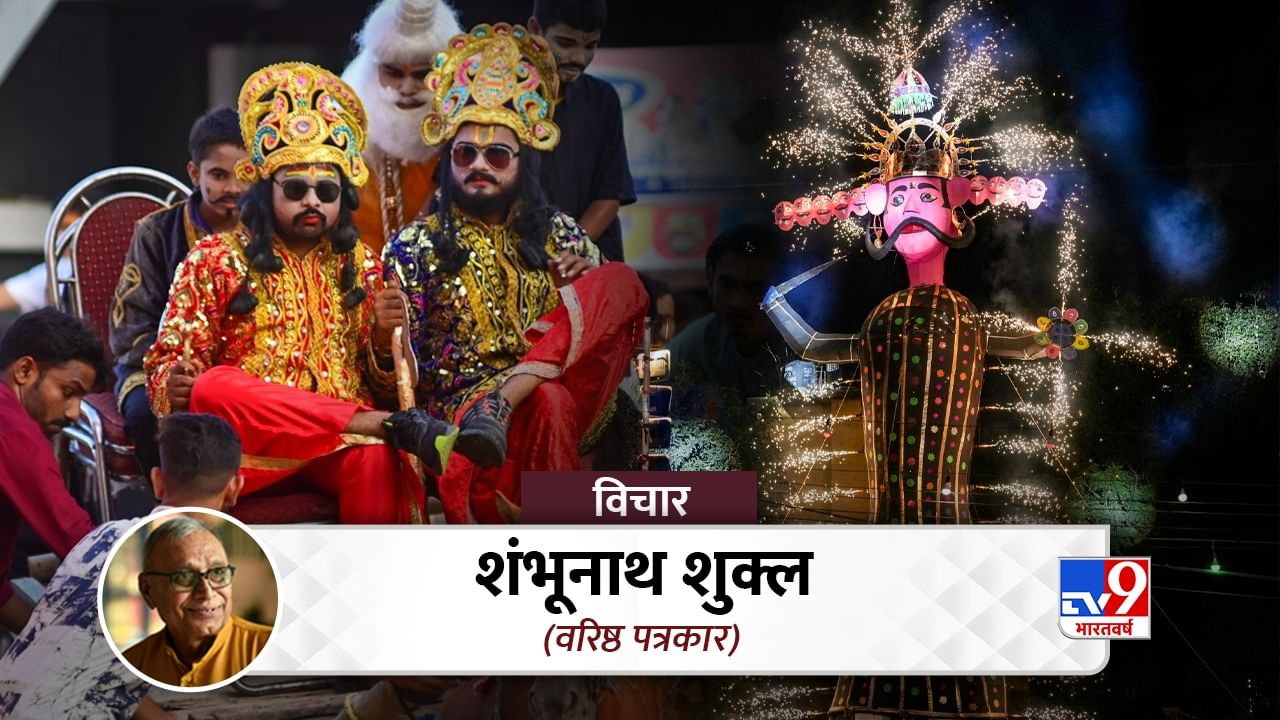
The author, reflecting on the cultural practice of burning effigies of Ravana during Dussehra, argues for a deeper understanding of Ram’s character beyond the ritual. The article begins with a personal anecdote from the author’s time as editor of Jansatta in Kolkata. Yogesh Ahuja, representing the Punjabi community, requested the author’s assistance in staging a Ram Leela at the Brigade Parade Ground. The challenge was to condense the entire Ramayana narrative, from Ram’s birth to the slaying of Ravana, into a concise performance.
Despite initial hurdles, the project proceeded. The author enlisted the help of Syed Mahfooz Hasan Khan Pundarik, a scholar well-versed in the Ram Katha. Pundarik crafted a play beginning with Ram’s marriage and ending with the death of Ravana, omitting the depiction of Ram’s birth as it was a well-known fact. This condensed version gave the audience a good understanding of the story.
The article emphasizes the need to delve into the complexities of Ram’s character rather than focusing solely on the symbolic act of burning Ravana. The author draws attention to Ram’s strategic approach towards his enemies.
Ram faced challenges when he invaded Lanka. Forming alliances in an unfamiliar land with different customs was difficult. Ram’s treatment of the less privileged is an important facet of his personality. However, Ram’s character also has problematic aspects, and it is important to consider these aspects. The author emphasizes the importance of assessing the aspects of Ram’s character which are everlasting.
Ram’s humility and respect for his enemies are exemplified by his seeking counsel before deciding on Vibhishana’s plea for asylum. After Ravana’s death, Ram expressed sorrow, acknowledging his adversary’s intellectual prowess. This demonstrates Ram’s greatness.
The author references Maharishi Valmiki’s portrayal of Ram as a patient, radiant, and self-controlled individual of the Ikshvaku dynasty, highlighting his virtues. Ram’s attributes are key to his position as a king.
Ram embodies both human and divine traits. He represents the ideal king in the Indian feudal system, emphasizing values such as fidelity and the willingness to sacrifice everything for one’s spouse.
The narrative illustrates a king whose virtue and actions elevated him to a divine position.