

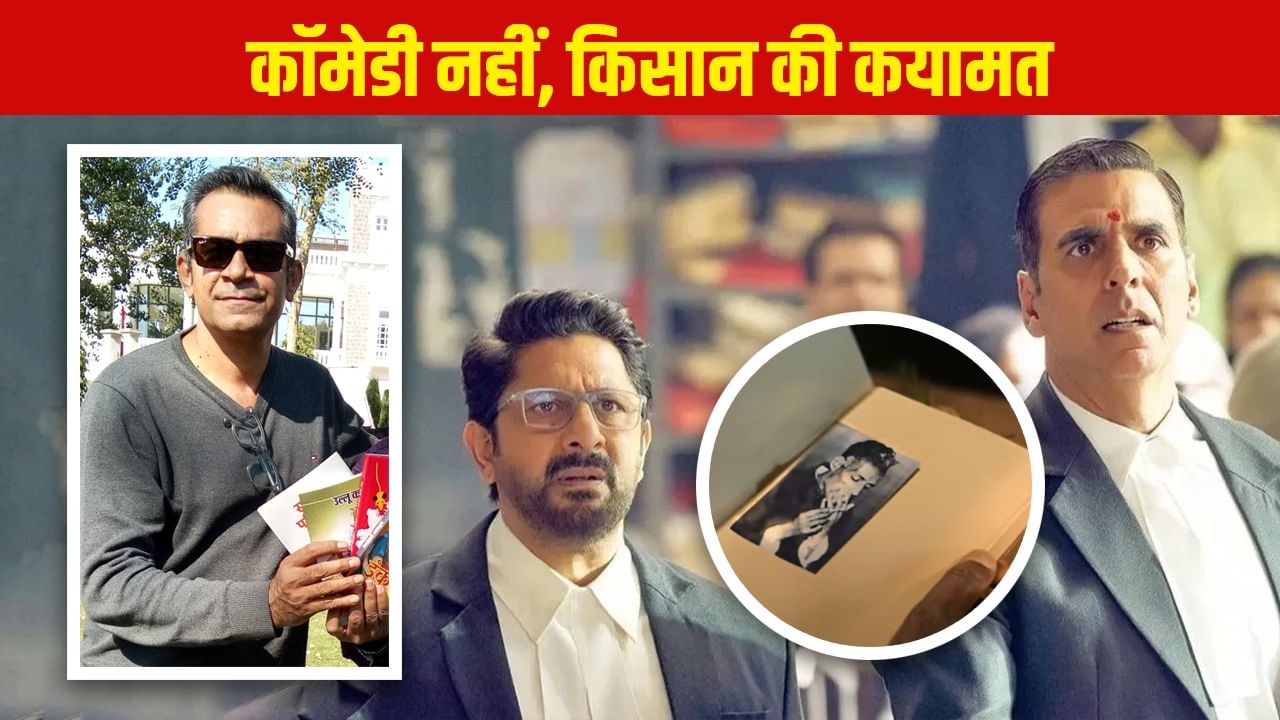
The anticipation surrounding Jolly LLB 3 was heightened by the release of its trailer. The film itself deepened this anticipation. The trailer’s inclusion of poet Muktibodh’s image was particularly striking, prompting viewers to consider the film’s underlying themes. The question that arose was: What is the film’s political message? This question was amplified by the depiction of a farmer examining pages, including a prominent picture of Muktibodh. What was the significance of Muktibodh’s image, and how would it influence the narrative? The presence of such a prominent Hindi poet in a film that was largely marketed as a comedy was also a focal point.
Beyond the courtroom setting, the film’s seriousness is emphasized by Judge Saurabh Shukla and other elements. The film portrays Seema Biswas in a moment of grief, highlights the dynamic between the weak and the strong, and presents the conflicts between farmers and industrialists. The judge’s wit, along with Muktibodh’s famous quotations, added to the film’s depth, intensifying the viewer’s curiosity about the director’s intentions.
Muktibodh is regarded as one of the most realistic and progressive poets in Hindi literature. He is praised for his insightful portrayals of the complexities of life. He boldly stated in the sixties, ‘The moon’s face is crooked,’ challenging romantic ideals. The writings of Muktibodh have always been of great interest to readers as he also brought to light the hardships of farmers and the working class. He wrote of the moon’s illusions and the shadows, and the mischievous nature of moonlight.
Muktiibodh’s work, including writings such as ‘Now one must take all the risks of expression, break the monasteries and forts…,’ highlighted the importance of standing against injustice. The film’s judge, Saurabh Shukla, acknowledges the significance of both ‘paper’ and ‘spirit’ in decision-making, indicating that a comprehensive understanding of ‘paper’ stems from ‘spirit’, underscoring the requirement for both in true justice.
If ‘spirit’ had been valued more, the farmer Raja Ram Solanki’s land would not have been lost. The sequence is deeply affecting, reflecting loss and struggle. The farmer, after initially asserting, ‘My land, my will,’ later loses his land and his life. The film’s images and sounds combine to create a deeply emotional experience for the viewers.
As the farmer turns the pages, verses appear on the screen. In this scene, the image of Gajanan Madhav Muktibodh, holding a bidi, appears. This image has long been a significant symbol of Hindi literature. His presence in the film allows the audience to understand the film’s message. The poem recites during the farmer’s suicide:
My roof kept leaking still
I prayed for rain
From my grandfather to my great-grandfather
From my father to my grandfather
And the inheritance I received from my father
I wanted to give the same to my son
Wanted to give a little land
And a handful of seeds so that
Everyone’s hunger could be quenched
That’s why I believed
In all their words
In the sentiments expressed in the speech
I kept watching, mesmerized
Their heads rising towards the sky
And they pulled the ground from under my feet
I was proud to be an Annadata (grain giver)
This was my crime that
I was a farmer.
‘Our land, our will’
The film does not specifically name the poem’s author. The story is inspired by the Bhatta Parsaul village events of 2011. The setting is Rajasthan, but the village name remains the same. The film’s central theme is ‘Our land, our will.’ Industrialist Haribhai Khetan uses all sorts of tricks to grab the village’s land for the ‘Bikaner to Boston’ project. The local administration and others are under his control. When Raja Ram Solanki takes a stand, the establishment falters. Akshay Kumar and Arshad Warsi, the lawyers, realize the injustices and come together to stand up against oppression. The judge also undergoes a change, choosing ‘spirit’ over ‘paper’.