

Suzuki Motor Corporation has outlined its strategic powertrain plan for the next ten years, encompassing internal combustion engines, battery electric vehicles, and hybrid technologies. This approach is designed to support the company’s carbon neutrality objectives, aiming to eliminate carbon emissions by 2050 in Japan and Europe, and by 2070 in India. The strategy highlights Suzuki’s dedication to both conventional petrol engines and the progression of electric and hybrid vehicle technologies.
The roadmap includes plans for new models featuring fuel-efficient hybrid engines and vehicles designed to use biofuel or e-fuel technology. Suzuki believes that providing varied powertrain options that consider the unique requirements and infrastructure of each market is vital for the future of the automotive industry. This initiative is expected to boost Suzuki’s position in global markets while also promoting environmentally friendly mobility in India’s rapidly expanding automotive sector.
Specifically targeting the Indian market, the Japanese automaker intends to introduce FFVs (Flex Fuel Vehicles) capable of running on up to 85% bioethanol by the end of the fiscal year, March 2026. Maruti Suzuki India already started offering E20 bioethanol-compatible engines in April 2025.
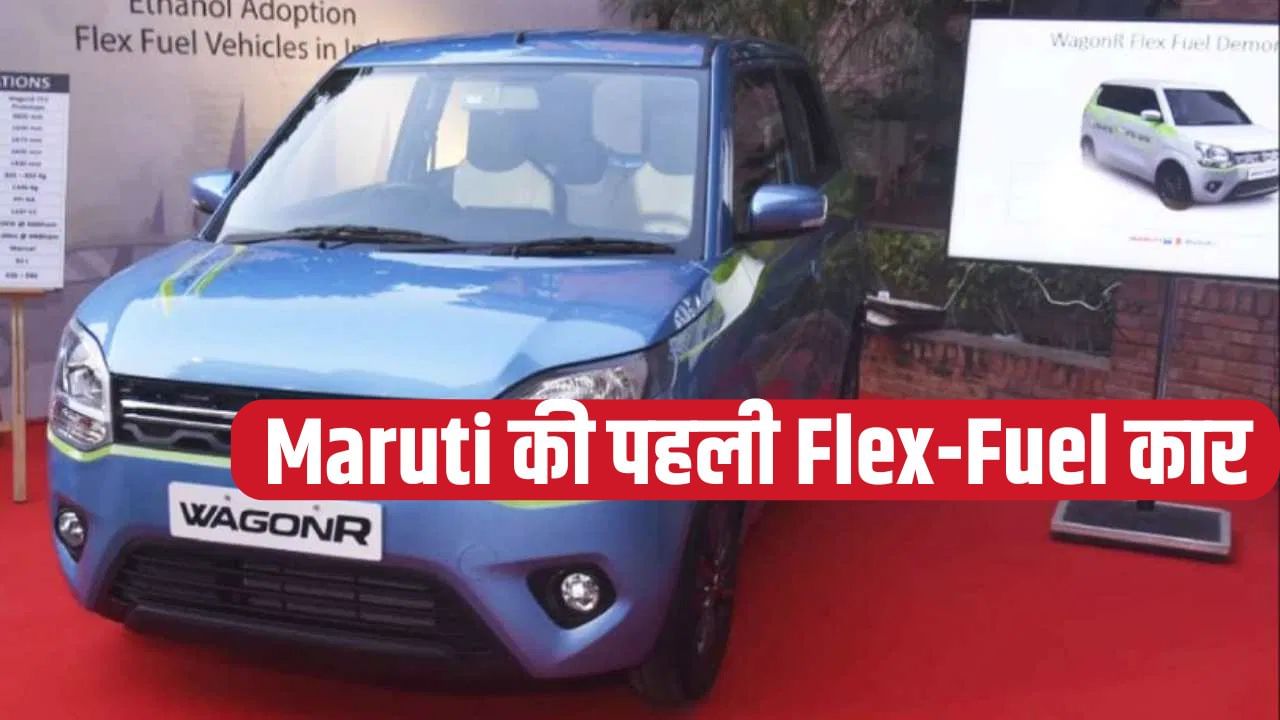
The Maruti Wagon R flex-fuel prototype, first presented in December 2022 and later at auto expos, is set to become India’s first mass-market flex-fuel vehicle. This car will be capable of operating on a variety of ethanol-petrol mixtures, ranging from 20% (E20) to 85% (E95). The model has been developed by Maruti Suzuki’s engineering team, with input from Suzuki Motor Corporation, Japan.
In 2026, the Indo-Japanese automaker will launch its multi-powertrain strategy in India with the eVitara electric SUV and the Fronx hybrid compact crossover. The Maruti Fronx will represent the brand’s first hybrid offering, showcasing an in-house developed strong hybrid powertrain. Reports suggest that Maruti Suzuki’s new strong hybrid system will be more economical than Toyota’s Atkinson hybrid powertrain. The company plans to integrate this new hybrid powertrain into models like the next generation Baleno, a compact MPV, and the next generation Swift and Brezza.