

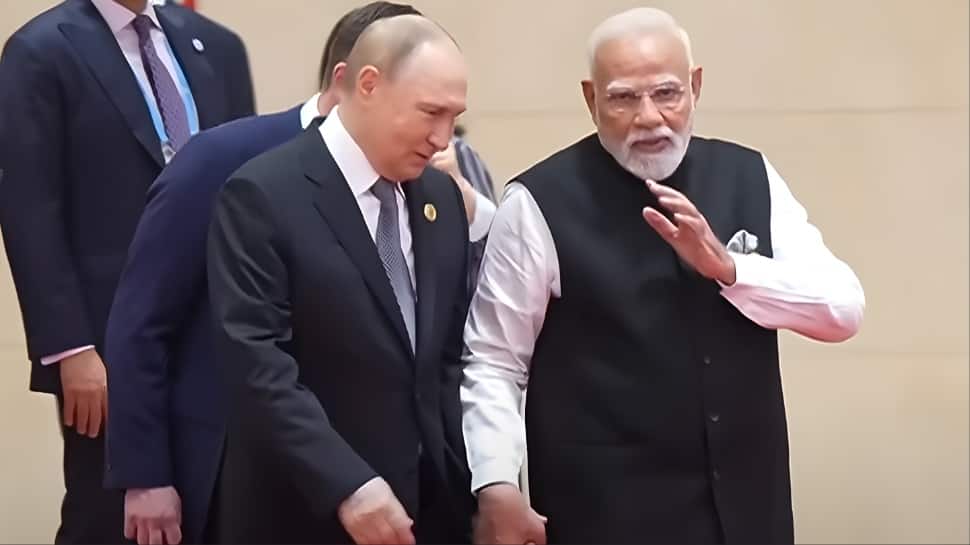
The 23rd India-Russia Annual Summit, marked by Russian President Vladimir Putin’s visit to New Delhi, was a pivotal moment in contemporary geopolitics. It underscored the enduring strength of the India-Russia partnership amidst a world grappling with significant geopolitical fragmentation. Crucially, the summit reaffirmed India’s steadfast commitment to its foreign policy doctrine of strategic autonomy, choosing independent action over rigid alignment.
The summit concluded with a substantial package of agreements, including a “Vision 2030” roadmap focused on trade and technology, renewed commitments to energy and nuclear cooperation, and the strategically important RELOS logistics pact. Additionally, new arrangements were finalized concerning labor mobility, healthcare, maritime training, and food safety, indicating a comprehensive deepening of bilateral engagement.
Western sanctions imposed on Moscow have accelerated Russia’s economic and strategic pivot towards Asia, with India emerging as a principal partner. Rather than isolating Russia, these sanctions have inadvertently amplified India’s geopolitical influence and created new avenues for cooperation.
The energy sector is a prime illustration of this dynamic. Russia, facing restricted access to Western markets, began offering discounted crude oil. India, grappling with escalating energy demands, seized this opportunity, leveraging Russian oil to manage inflation and secure stable, affordable supplies. Although recent sanctions have led to a reduction in purchases, the energy trade corridor developed over the past two years is now robust enough to expand.
Russia, finding itself cut off from Western technology and finance, is actively seeking dependable partners for both its exports and its import needs. India’s large domestic market and growing international clout position it as an ideal partner. For New Delhi, cultivating deeper ties with Russia is a strategic maneuver that enhances its autonomy and expands its foreign policy options in a world increasingly defined by division.
India’s foreign policy is characterized by its adept balancing act. It has simultaneously expanded cooperation with the United States and European nations while diligently maintaining its historic relationship with Moscow. India’s pattern of abstaining on UN votes concerning Russia, increasing energy procurement, and concurrently strengthening defense and technology ties with the West represents a deliberate and flexible diplomatic strategy.
While the partnership yields significant advantages, it also presents challenges. India must carefully navigate potential criticism from Western capitals, particularly as the conflict in Ukraine continues. Prudent diplomacy and transparent communication are paramount. Nevertheless, the strategic benefits of India positioning itself as a major global player capable of engaging with diverse and even rival powers are substantial, bolstering its influence in a multipolar global order.
The summit revisited the core tenets of the India-Russia relationship: defense, economics, and energy. Defense cooperation remains paramount, with Russia’s military equipment forming a significant portion of India’s arsenal, necessitating ongoing support for maintenance and upgrades. The new RELOS logistics pact promises to enhance operational collaboration.
Economically, the ambitious target of $100 billion in annual bilateral trade by 2030 is a key focus. Efforts are progressing towards a potential Free Trade Agreement with the Eurasian Economic Union. The push for de-dollarized trade is evident in initiatives to facilitate rupee-ruble settlements and explore linkages between India’s RuPay and Russia’s Mir payment systems.
In the energy and minerals sector, Russia has assured India of consistent fuel supplies. Joint ventures in civil nuclear projects, including advanced reactor technologies, and collaboration on critical minerals were also pledged. Agreements on labor mobility are intended to create safer and more structured employment opportunities.
President Putin’s visit served as a powerful demonstration of India’s multi-alignment strategy, showcasing its capacity to maintain close ties with Russia while actively strengthening partnerships with the United States, Europe, and the Indo-Pacific. The cordial personal interactions between Prime Minister Modi and President Putin highlighted the profound political significance India attributes to this relationship.
For Russia, India provides a vital strategic counterweight to its growing reliance on China. For India, Russia continues to be an indispensable partner for defense readiness and access to affordable energy. This summit represented not just a continuation, but a pragmatic recalibration of a long-standing relationship, solidifying its strategic nature based on mutual interests and shared resilience.