

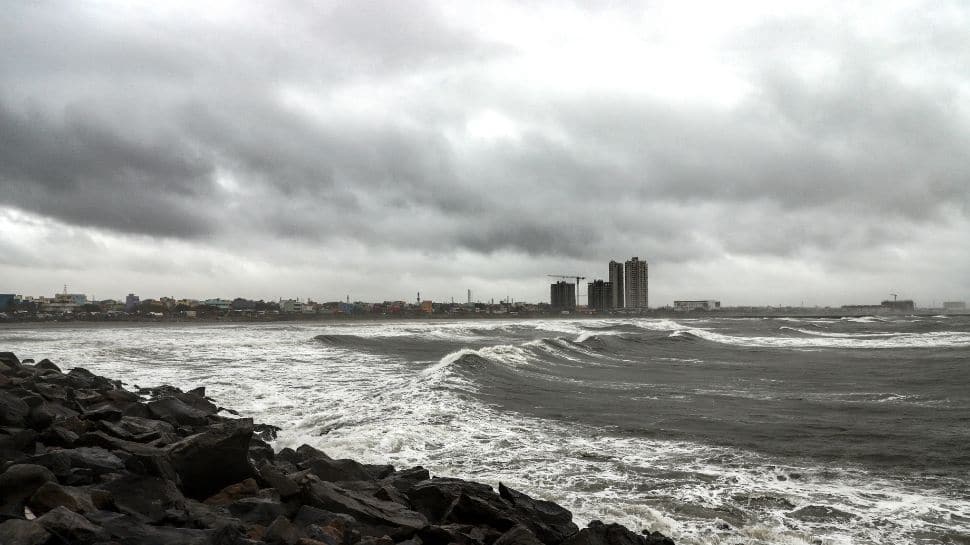
Cyclone Ditwah, a significant tropical storm, has rapidly intensified over the Southwest Bay of Bengal since its formation around November 26, 2025. The India Meteorological Department (IMD) has alerted coastal populations in Tamil Nadu, Puducherry, and South Andhra Pradesh to the impending threat. The storm’s quick development is attributed to a perfect storm of atmospheric and oceanic conditions.
Multiple factors converged to fuel Cyclone Ditwah’s rapid growth. Critically, sea surface temperatures were unusually warm, ranging from 28°C to 30°C, providing the latent heat essential for storm formation. Compounding this was a low vertical wind shear environment, allowing the storm’s structure to remain intact and strengthen. The presence of rich moisture from monsoonal winds further facilitated its quick ascent from a low-pressure system to a full cyclonic storm within a mere 24 to 36-hour period.
The name ‘Ditwah’ was provided by Yemen, referencing the Detwah Lagoon, a notable natural attraction in Yemen’s Socotra Island chain. This naming practice is part of a standardized system managed by the WMO-ESCAP, where names are drawn sequentially from a list contributed by member countries in the Indian Ocean region.
Sri Lanka has tragically been the most severely impacted, reporting at least 410 deaths and 336 missing individuals. Heavy rainfall, widespread flooding, and dangerous landslides triggered by Cyclone Ditwah have caused immense destruction, particularly in the Kandy district. Over 20,000 people are currently displaced, and an estimated 1.2 million have been affected by the storm’s wrath. Emergency services are working tirelessly to provide aid, clear infrastructure blockages, and restore vital utilities. India has responded swiftly with essential relief and humanitarian assistance.