

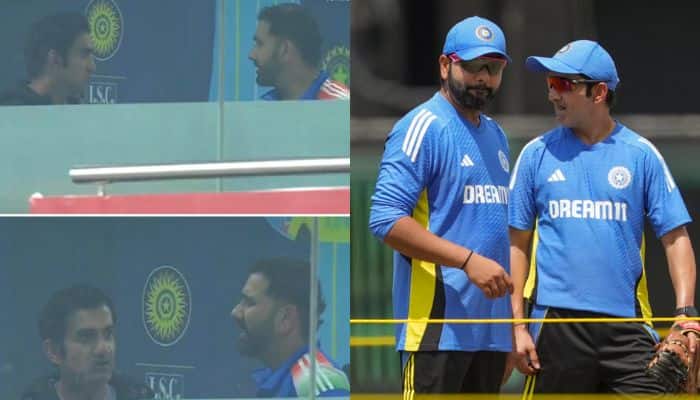
India clinched a crucial 17-run victory over South Africa in the opening ODI, but the post-match celebrations were accompanied by significant online buzz surrounding an intense discussion between captain Rohit Sharma and head coach Gautam Gambhir. Cameras captured the duo in a passionate exchange in the dressing room, which swiftly went viral and triggered a wave of speculation among cricket fans about the nature of their conversation.
The foundation for India’s win was laid by Virat Kohli’s magnificent century. His unbeaten 135 runs off 120 balls, a display of composed aggression and flawless strokeplay, not only reaffirmed his class in the ODI format but also highlighted his continued commitment to peak physical and mental condition. Kohli attributed his success to mental preparation and enjoying the game. He and Rohit Sharma, who scored 57, formed a pivotal 136-run partnership that guided India to a formidable 349/8.
The viral video showing Rohit Sharma and Gautam Gambhir in a deep, animated discussion, with Sharma seemingly disagreeing, has become a focal point for online debate. The absence of audio has allowed for myriad interpretations, ranging from tactical disagreements to strategic planning and player assessments. This conversation gains further intrigue against the backdrop of ongoing discussions about the future of senior players in India’s ODI squad.
India’s bowling attack, particularly the pacers, played a vital role in defending the imposing total. Harshit Rana provided an exceptional start, taking crucial early wickets and disrupting the South African chase. Arshdeep Singh also contributed significantly to dismantling the opposition’s batting order. Despite a spirited effort from South Africa’s middle-order batsmen, they were ultimately bowled out 17 runs short.
Earlier in the match, Gambhir was visibly engaged and supportive, cheering Sharma’s fifty and giving a standing ovation for Kohli’s century, even sharing a warm moment with the star batsman. These earlier displays of positive reinforcement stand in stark contrast to the intense post-match discussion, adding complexity to the public’s perception of the team’s internal dynamics.