

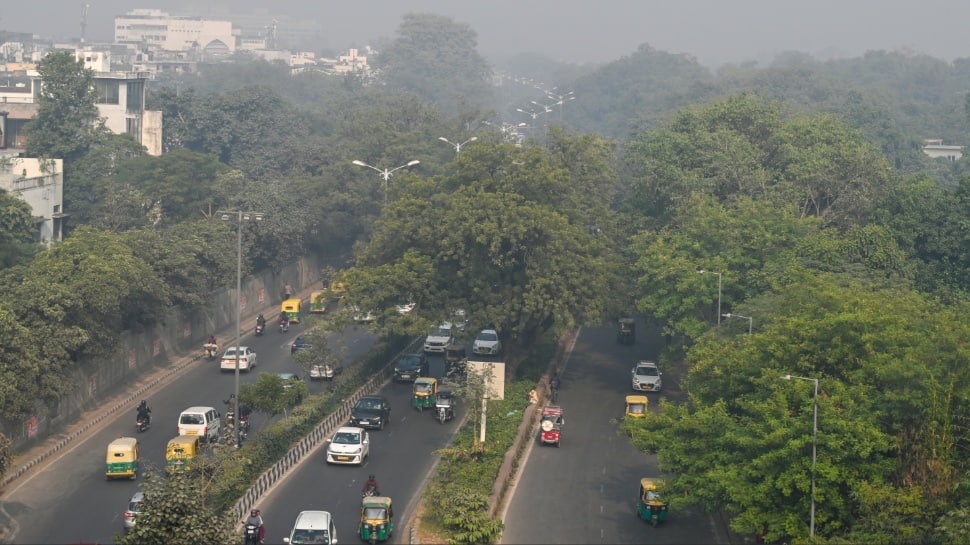
The air quality in Delhi has once again crossed the critical threshold, entering the ‘Severe’ category with an overall Air Quality Index (AQI) of 384. This marks the 14th consecutive day of poor air quality in the capital, a worrying trend that emerged just two days after the Graded Response Action Plan’s Stage III restrictions were revoked.
Several key areas in Delhi are now experiencing hazardous air. Nineteen out of 39 monitoring stations have reported AQI levels above 400, a clear indicator of ‘Severe’ pollution. Anand Vihar (411), Bawana (414), Ashok Vihar (417), Chandni Chowk (407), Narela (407), and Aya Nagar (402) are among the worst-affected locations. Other areas like ITO (396), Alipur (355), and IGI Airport (360) are in the higher end of the ‘Very Poor’ range.
The pollution crisis is also acutely affecting the wider National Capital Region (NCR). Noida is facing severe air quality, with hotspots like Sector 116 (AQI 438) and Sector 125 (AQI 422) in the danger zone. Ghaziabad shows a mixed picture, with Loni at AQI 425 (‘Severe’) and Indirapuram at 385 (‘Very Poor’). Greater Noida’s Knowledge Park-V is nearing the ‘Severe’ mark at 399. Gurugram’s AQI is recorded at 318, categorized as ‘Very Poor’.
Cold weather conditions are significantly contributing to the current air pollution levels. The combination of dropping temperatures and low wind speeds traps pollutants near the surface, exacerbating the problem. The India Meteorological Department predicts cloudy skies and foggy conditions, with minimum temperatures expected to hover between 8 and 10 degrees Celsius. The Air Quality Early Warning System anticipates that air quality will likely fluctuate between ‘Severe’ and ‘Very Poor’ for the upcoming six days, signaling no immediate improvement for residents.