

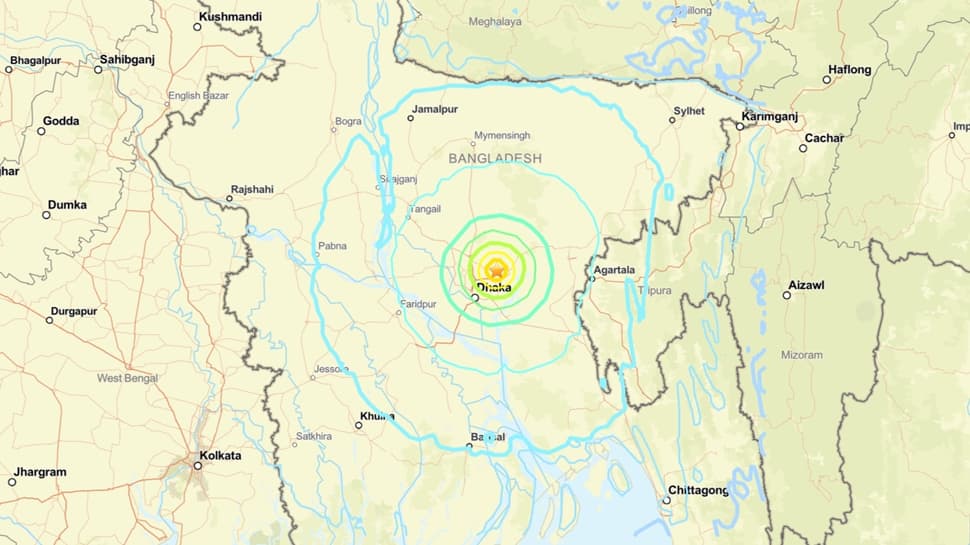
Early Friday, Bangladesh experienced a significant seismic event, with a magnitude 5.5 earthquake striking near Narsingdi. The United States Geological Survey reported the epicenter was approximately 14 kilometers west-southwest of the town, occurring at a depth of 10 kilometers. Tragically, preliminary reports indicate that at least six people have lost their lives due to the earthquake.
The quake, which occurred at 04:38:26 UTC, sent powerful tremors across the region. In Dhaka, residents were seen fleeing buildings in a state of panic, with social media displaying alarming images of structural distress. The seismic waves were potent enough to be felt by people in parts of Northeast India, including West Bengal and Assam.
Emergency and governmental bodies are currently engaged in assessing the full scope of damage and ensuring public safety. While the immediate aftermath involves search and rescue efforts, the possibility of further aftershocks is being closely monitored. Official figures on casualties are expected to be updated as more information becomes available.
Bangladesh’s geological makeup, characterized by its location on the boundary of multiple tectonic plates and proximity to active fault lines, makes it exceptionally vulnerable to earthquakes. This inherent risk poses a significant threat, particularly to densely populated areas like Dhaka.