

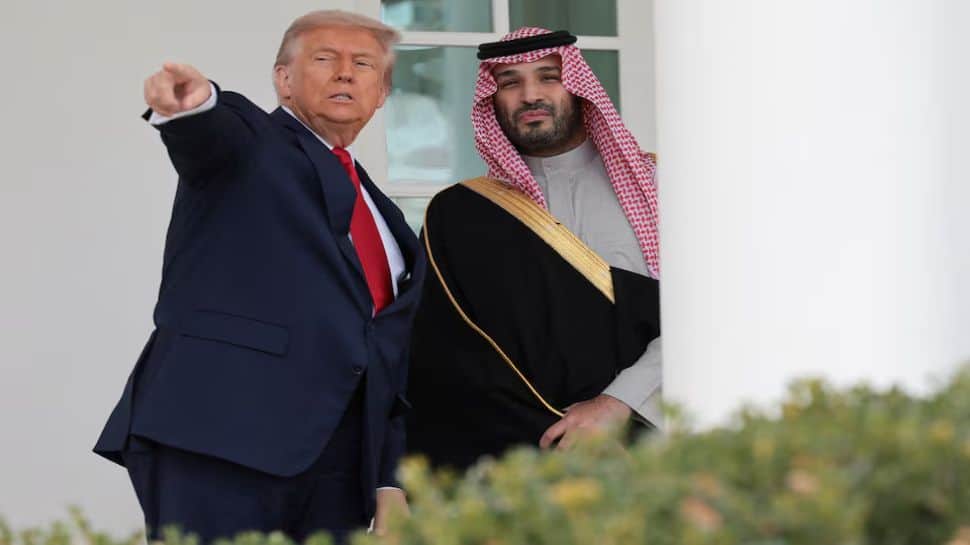
The White House hosted Saudi Crown Prince Mohammed bin Salman for a high-profile summit with President Donald Trump, showcasing a strong US-Saudi alliance. The elaborate reception underscored the deepening strategic relationship between the two countries.
A critical outcome of the summit was Saudi Arabia’s conditional willingness to join the Abraham Accords. Crown Prince Mohammed articulated Riyadh’s stance unequivocally: the kingdom will only normalize relations with Israel if a tangible road map for a Palestinian state is established. He emphasized, “We want also to be sure that we secure a clear path (to a) two-state solution.”
Both leaders reportedly had a “healthy discussion” on accelerating efforts to create the necessary conditions for a two-state resolution, aligning with Saudi Arabia’s commitment to the Arab Peace Initiative.
A significant defense cooperation agreement was also concluded, with President Trump confirming the finalization of a pact. This includes the planned delivery of F-35 fighter jets to Saudi Arabia, with no compromise on their advanced features, potentially influencing the regional military balance.
Discussions also addressed the complex issue of Iran. President Trump spoke about past US actions while also signaling an openness to dialogue, a sentiment echoed by Crown Prince Mohammed, who pledged Saudi Arabia’s support in mediating any potential US-Iran diplomatic process.
On the economic front, substantial Saudi investments in the US economy were confirmed, projected to reach hundreds of billions and potentially a trillion dollars. These commitments are expected to generate significant economic opportunities in various high-tech industries.
The summit unequivocally demonstrated that Saudi Arabia’s integration into the Abraham Accords is inextricably linked to progress on the Palestinian issue. The desire for peace with Israel is present, but it is firmly anchored to the demand for a viable two-state solution, with all other matters revolving around this core prerequisite.